The terms small apartment vs studio apartment get used interchangeably in rental listings so consistently that most people assume they mean the same thing. According to the National Multifamily Housing Council‘s research on rental housing trends, studio apartments represent a significant and growing segment of the urban rental market — with studio unit construction increasing substantially in major metropolitan areas as housing developers respond to the demand from single occupants and young professionals who prioritize location and cost over living space square footage.
But studio and small apartment do not mean the same thing — and understanding the genuine difference between them is the knowledge that prevents the lease-signing regret that comes from discovering what you actually agreed to after you have already moved in.
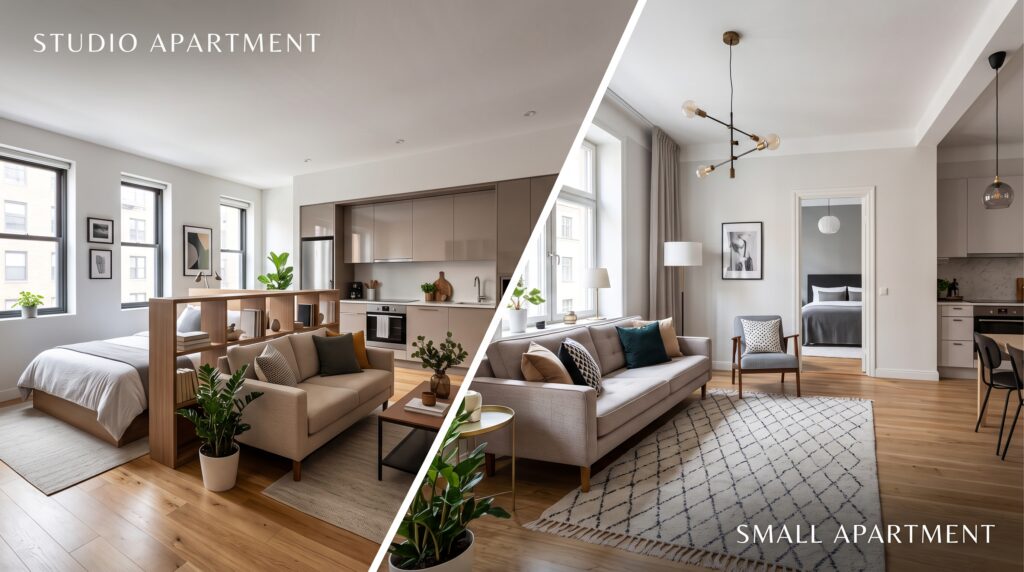
The small apartment vs studio apartment difference is structural rather than dimensional — it is about how the living space is configured rather than how large it is. A 400-square-foot space can be either a studio or a small one-bedroom apartment depending entirely on whether it contains a separate bedroom or a single open living area. This structural difference produces meaningfully different living experiences that suit different lifestyles, work situations, and personal preferences — differences this guide covers honestly so you can make the right choice for your specific situation.
The Fundamental Definition Difference
The definition that distinguishes studio from small apartment is simple and structural.
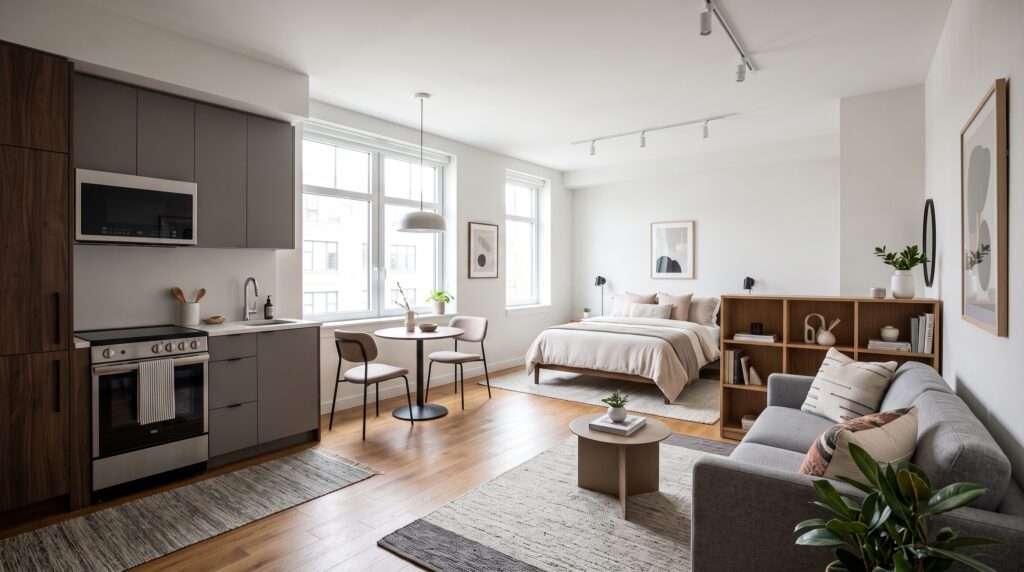
A studio apartment is a self-contained living unit where all living functions — sleeping, living, dining, and kitchen — occupy a single open room with no separating walls between them, plus a separate bathroom. The sleeping area in a studio is not a separate room — it is a zone within the same open space as the living area, kitchen, and any dining area. The studio’s defining characteristic is the absence of a separate bedroom.
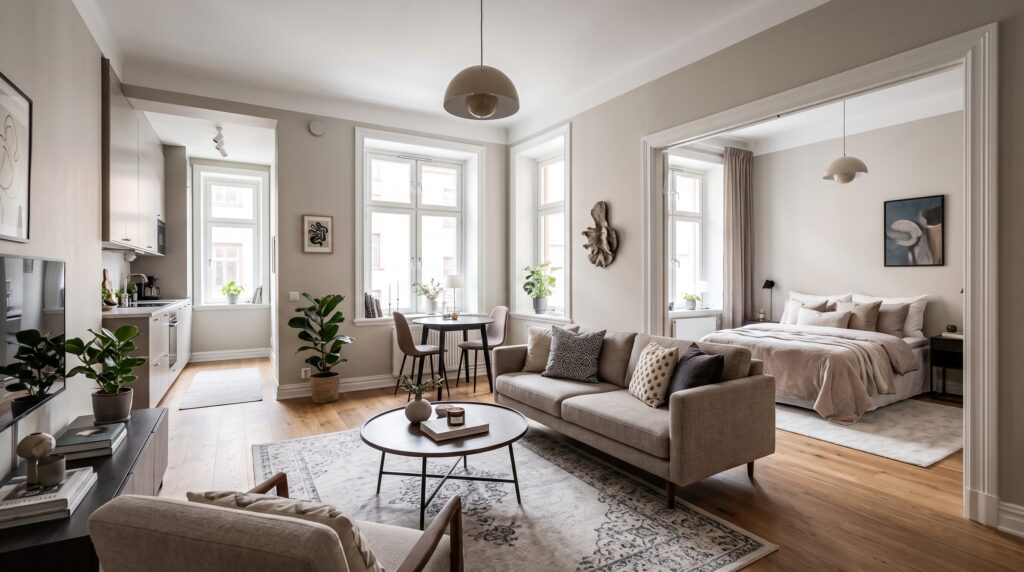
A small apartment — in common usage — typically refers to a one-bedroom apartment whose total square footage is on the smaller end of its type. The critical distinction is the separate bedroom: a wall and a door that physically separates the sleeping space from the living areas. This wall is not a minor architectural detail — it produces meaningful differences in privacy, noise management, sleep quality, and the psychological separation between rest and activity that enclosed sleeping spaces provide.
The confusion arises because both can be small in square footage. A 350-square-foot studio and a 450-square-foot one-bedroom are both small in the general sense of the word. But they are fundamentally different living environments that suit different people and different lifestyles.
Some markets add variations to this definition — the alcove studio or junior one-bedroom that has a sleeping alcove separated from the main living area by a partial wall or a doorway without a door. These hybrid configurations fall between the pure studio and the separate-bedroom one-bedroom and are worth evaluating specifically rather than categorizing as either type without examining the actual floor plan.
Small Apartment vs Studio Apartment…The Cost Comparison.
The financial difference between studio and small one-bedroom apartments is the most immediately quantifiable comparison and the one that most directly drives the decision for budget-constrained renters.
Studios are consistently less expensive than one-bedroom alternatives in the same building and neighborhood. The rental premium for a separate bedroom — the wall and door that encloses the sleeping space — typically runs 15 to 30 percent above equivalent studio pricing in the same building, with the premium varying significantly by market. In high-demand urban markets where housing costs are elevated the absolute dollar difference between studios and one-bedrooms can represent several hundred dollars per month — a meaningful annual cost difference that justifies serious consideration of what the separate bedroom actually delivers for that premium.
Utility costs are typically lower in studios through the smaller volume of space that heating and cooling systems must manage. The studio’s single-room layout also simplifies the lighting cost calculation — one zone to illuminate rather than multiple rooms requiring separate light fixtures and separate occupancy patterns.
The cost per square foot is typically higher in studios than in one-bedrooms — you pay more per square foot for the studio’s convenience and location accessibility than for the one-bedroom’s additional room — but the lower total cost despite the higher per-square-foot rate is what makes studios attractive to cost-conscious renters whose primary budget constraint is total monthly housing cost rather than per-square-foot efficiency.
The Space and Privacy Comparison
Space and privacy considerations produce the most significant livability differences between studio and one-bedroom configurations — the differences that most directly affect daily quality of life beyond the financial comparison.
Sleeping privacy in a studio:
The studio’s open plan means the sleeping area has no visual or acoustic separation from the rest of the living space. For solo occupants this is frequently a non-issue — you are the only one whose presence affects your sleeping environment. For couples or roommates the absence of sleeping privacy is a more significant consideration — the partner who keeps different hours, the guest who stays over, the roommate whose nighttime habits differ from yours all affect the sleeping environment in a studio in ways that a bedroom door prevents in a one-bedroom.
The light management that sleep quality requires — blackout conditions during sleep periods — is also more complex in a studio where blocking light from the sleeping zone without blocking it from the entire open space requires specific furniture and partition strategies that one-bedroom sleeping privacy provides automatically through the room’s walls.
Work from home considerations:
The studio apartment dweller who works from home faces the most significant livability challenge that this apartment type creates — the single open space that must simultaneously serve as bedroom living room kitchen and home office without the room separation that one-bedroom alternatives provide for at least the sleeping function. For the complete system that creates a genuinely productive home office within a small or studio apartment check out our guide on how to create a home office in a small apartment — 10 proven tips that work even in single-room studio layouts.
Guest accommodation:
Studios present genuine challenges for hosting overnight guests — the absence of a separate room means guests and hosts share the open sleeping area or creative sleeping arrangements using a sofa bed or fold-out furniture replace the private guest room that one-bedroom alternatives can provide. For renters whose lifestyle includes regular overnight guests the one-bedroom’s ability to offer separate sleeping spaces is a meaningful practical advantage.
The Lifestyle Compatibility Question
The right choice between studio and small apartment depends significantly on lifestyle factors that the square footage and cost comparison alone cannot resolve.
Studios suit:
Single occupants with minimalist living preferences whose possessions fit comfortably in a compact open-plan space. People who spend significant time outside the apartment — commuters, frequent travelers, social people whose home is a base rather than a center of daily life. Young professionals in high-cost urban markets who prioritize location accessibility over living space and who make the trade-off consciously rather than by default. People who genuinely embrace compact living and who find the open-plan coziness of a well-furnished studio appealing rather than constraining.
One-bedrooms suit:
People who work from home and need the physical separation between work and rest space that enclosed rooms provide. Couples who share a living space and whose different schedules require sleeping privacy at different times. People who host guests regularly and want the ability to offer separate sleeping accommodation. People whose lifestyle involves bringing work home, maintaining dedicated hobby spaces, or simply needing more organized separate functional zones than a studio’s open plan can accommodate through furniture alone.
Making a Studio Work — The Strategies That Matter
If the financial reality of your target market makes a studio the practical choice regardless of the lifestyle preference factors above, specific strategies make studio living significantly more comfortable than the open-plan challenge it appears to present.
Zone definition through furniture is the studio-specific design strategy that creates the psychological separation between living functions that walls provide in one-bedroom alternatives. A sofa facing away from the sleeping area creates a visual living room boundary. A bookshelf or room divider between the sleeping zone and the living area creates partial visual privacy without permanent modification. A rug under the bed and a different rug under the seating area signal zone boundaries on the floor plane even when the ceiling-level view is continuous open space.
Vertical storage matters more in a studio than in any other apartment type because the single open space accumulates the storage needs of every living function without the separate rooms that one-bedrooms distribute storage needs across. Every vertical surface that can support shelving, wall hooks, or mounted organizational systems contributes to the floor clearance that makes studio living feel spacious rather than crowded.
Murphy beds and convertible furniture are the studio design solutions that most completely transform the sleeping-area limitation — the wall bed that folds away during the day converting the bedroom zone into additional living area and the convertible sofa that transitions from seating to sleeping without consuming permanent floor space as a fixed bed would.
The Decision Framework
Three questions that determine the right choice for your specific situation:
What is the realistic monthly cost difference between studios and one-bedrooms in your target neighborhood? If the premium for a separate bedroom is 15 percent of a figure you can comfortably afford, the one-bedroom’s lifestyle advantages are worth the premium. If the premium represents the difference between a comfortable and a strained housing budget, the studio’s cost advantage is a more significant factor.
Do you work from home? If yes, the one-bedroom’s ability to separate work and rest space is a quality-of-life factor that the studio cannot match through furniture arrangement alone regardless of how skilled the studio design strategy applied to it is.
Are you a solo occupant? If yes, the studio’s sleeping privacy limitation is significantly less impactful than for couples or roommates sharing a studio’s single open sleeping zone.
Whichever option you choose the furnishing decisions that follow your lease signing are among the most impactful for how livable the space becomes — and studio apartments in particular demand more strategic furnishing than one-bedroom alternatives because the single room must serve every living function simultaneously. For the furnishing decision that follows your apartment choice check out our complete comparison of renting vs buying furniture for your apartment — the honest guide that helps you decide whether to invest in owned furniture or the flexibility that rental provides for your specific situation.
Frequently Asked Questions
Q: Is a studio apartment the same as a bedsit?
A: The terms overlap but are not identical. In the UK context bedsit traditionally refers to a single room with shared bathroom facilities — a configuration that most modern studio apartments improve on through their own private bathroom. In current rental market usage studio apartment consistently means a self-contained unit with private bathroom, kitchen facilities, and a single open living and sleeping area. Always confirm the specific configuration — particularly bathroom privacy — before signing any lease described by either term.
Q: Can two people comfortably live in a studio apartment?
A: Yes — with the right apartment size, the right furniture strategy, and compatible lifestyle habits between the two occupants. Couples who keep similar schedules, share minimalist possessions, and genuinely enjoy close-proximity living report comfortable studio cohabitation. Couples with significantly different sleep schedules, large combined possession volumes, or strong preferences for personal space within the home find studio living considerably more challenging. The honest answer is that it depends entirely on the specific people and the specific studio rather than a universal yes or no.
Q: How do I know if a listing is a true studio or just marketed as one?
A: Request the floor plan before viewing any apartment described as a studio. The floor plan reveals whether the sleeping area is genuinely open to the main living space or separated by walls and a door that the listing’s studio description is incorrectly applying. The alcove studio — with a partial wall creating a sleeping nook — is also worth identifying on the floor plan since it provides more sleeping separation than an open studio while falling short of the full bedroom enclosure that one-bedroom alternatives provide.
Q: Are studios harder to resell or sublease?
A: In most markets studios have narrower appeal than one-bedrooms for subleasing and resale — the limited sleeping privacy and single-room configuration suit a smaller segment of potential occupants than one-bedrooms whose separate bedroom suits couples, work-from-home professionals, and anyone who hosts guests alongside the single occupants that studios suit most naturally. If flexibility to sublease is a priority in your rental decision, the one-bedroom’s broader occupant appeal is a practical advantage worth factoring in alongside the cost and space considerations.
Conclusion
The small apartment vs studio apartment choice is ultimately a values question about what you are willing to trade for what. The studio offers lower cost and often better location accessibility at the price of sleeping privacy, work-from-home functionality, and guest accommodation capability. The one-bedroom offers the separate bedroom that sleeping privacy and lifestyle separation require at the price of higher monthly cost and sometimes less central location for an equivalent budget.
Neither is universally better. The studio is the right choice for the right person in the right situation. So is the one-bedroom. The key is making the choice deliberately based on honest assessment of your lifestyle, your work situation, your social habits, and your budget — rather than defaulting to whichever option you encountered first or assuming that the cheaper option is always the smarter one without considering what the premium for the alternative actually buys you in daily quality of life.
Explore the complete collection of apartment organization guides and resources at apartmentorganizerhub.com — Apartment Organizer Hub Blogs Page — for honest practical advice on every apartment living decision from the lease signing through the organization and decoration of the space you choose. And once you have chosen your apartment type check out our complete guide on how to make a small apartment feel bigger — 10 proven design tips that visually expand any compact space without a single structural change.