Creating a productive home office in a small apartment is one of the most practically important challenges that the remote work era has placed in front of apartment dwellers. According to Stanford University‘s research on remote work productivity, having a dedicated workspace — even a small, clearly defined one — significantly improves focus and work output compared to working from a sofa or shared living space, with the physical separation between work zone and rest zone producing measurable psychological benefits for remote workers regardless of how small that separation is in physical terms.
The person who works from their sofa today and sleeps on that same sofa tonight is not getting the mental delineation between work and rest that a dedicated workspace provides — the psychological signal that this space means work and this other space means rest that separate zones communicate to the brain even when the total square footage of the apartment makes that separation a matter of feet rather than rooms.
Knowing how to create a home office in a small apartment is not about having a spare room. It is about creating a dedicated workspace zone within the space you have — one that functions professionally during work hours, stores compactly when work is done, and does not consume your living space so completely that home no longer feels like a place to rest. These 10 proven tips cover every approach from the corner desk setup to the full closet conversion so you can find the solution that suits your specific apartment layout, your specific work requirements, and your specific aesthetic preferences.
Practical Tips on How to Create a Home Office in a Small Apartment
Following practical tips are useful if anyone wants to know how to create a home office in a small aparmtment:
Tip 1: Claim Your Corner With a Dedicated Corner Desk
The corner is the most efficient home office location available in any apartment — the space that is naturally less useful for furniture placement than wall-adjacent positions, that does not interrupt the primary traffic flow of any room, and that a corner desk converts into a genuine L-shaped workspace that provides more usable desk surface in a small footprint than any straight desk of equivalent square footage provides.
A corner desk creates two perpendicular work surfaces — one for your primary working setup, monitor and keyboard, and one for secondary items like notebooks, reference materials, or a second monitor — without the linear length that an equivalent straight desk would require to provide the same total surface area. This spatial efficiency makes corner desks the first recommendation for small apartment home office creation because they extract more workspace from less floor space than any other desk configuration.
The corner location also provides natural boundary definition — the workspace is in the corner and the living space is everywhere else. This physical boundary supports the psychological separation between work mode and home mode that working from a central sofa position cannot create.
Tip 2: Go Vertical With Wall-Mounted Shelving Above Your Desk
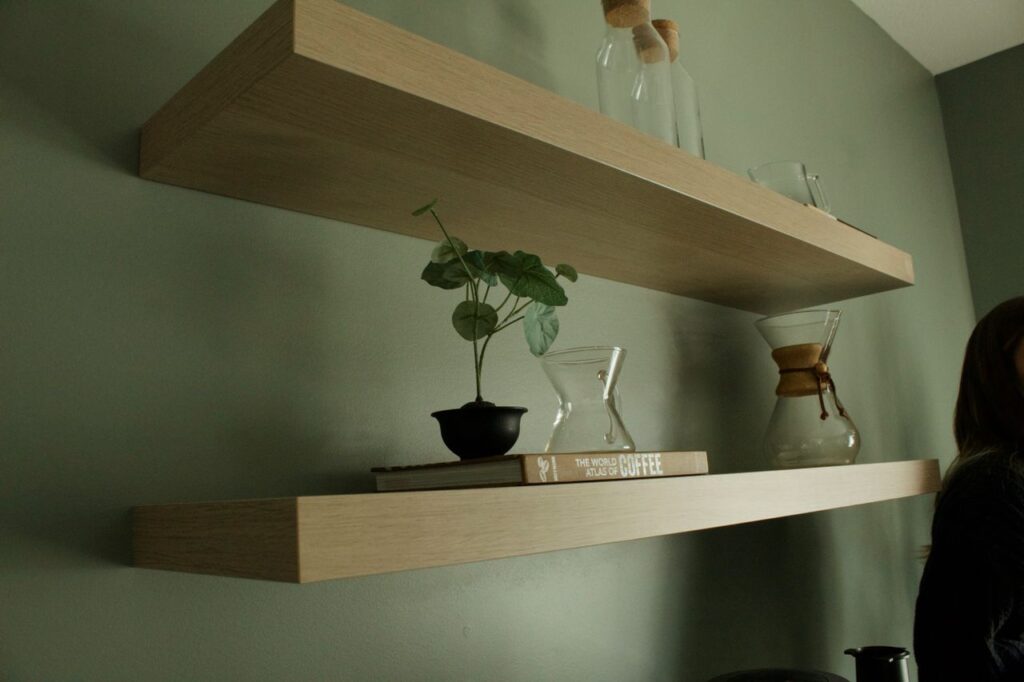
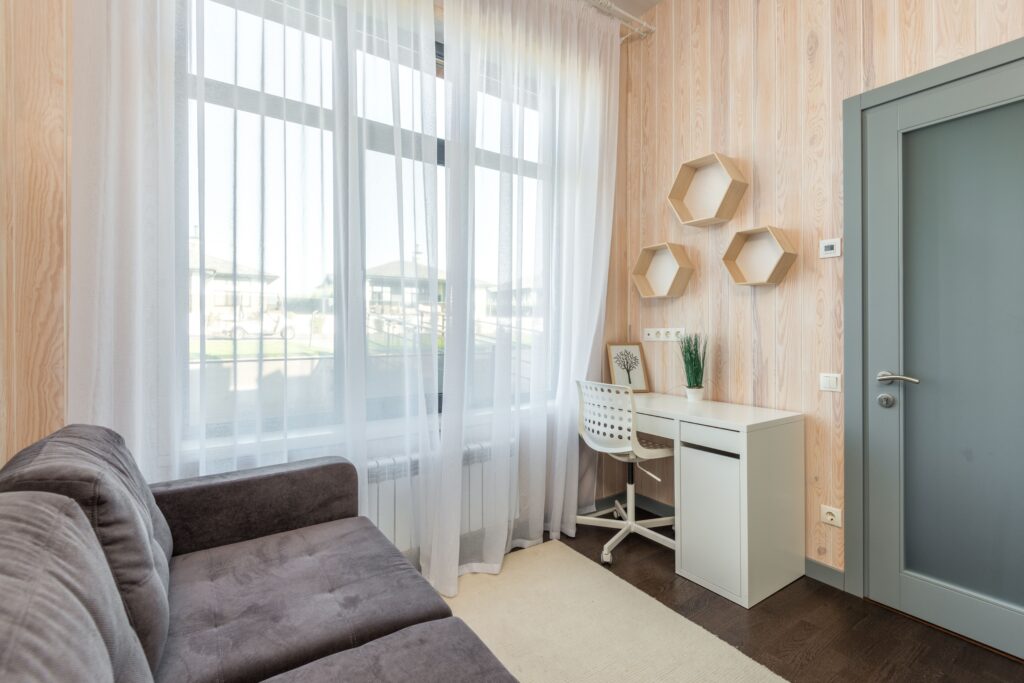
The desk surface is where the work happens. The wall above the desk is where the storage lives — and equipping the wall above your desk with shelving, pegboards, or wall-mounted organizers converts unused vertical space into the office storage that a dedicated home office room provides through its additional floor space and you recreate through vertical organization.
Floating shelves above the desk hold books, reference materials, printer, and decorative items that would otherwise consume desk surface. A pegboard above the desk holds frequently accessed accessories on hooks and holders that keep them visible and immediately accessible without occupying any horizontal surface. Wall-mounted file organizers hold paperwork in organized accessible positions without requiring a filing cabinet that consumes floor space you cannot spare.
The combination of desk surface for active work and organized vertical storage directly above for everything else creates the complete functional workspace that a dedicated office room provides — contained within a footprint that a corner or wall position in your existing room accommodates without claiming the room from its primary living function.
Tip 3: Use a Room Divider to Create Visual Separation
Visual separation between work zone and living zone is the psychological boundary that makes working from home genuinely sustainable over months and years rather than the blurred existence that open-plan living-working produces when no physical or visual separation exists. A room divider — a freestanding screen, a bookshelf, a curtain on a ceiling track, or a strategic furniture arrangement — creates this separation without the permanent wall that only renovation could provide.
A bookshelf used as a room divider serves double duty — the divider that creates the visual boundary and the storage that holds the books, files, and reference materials that a home office needs, all in one piece of furniture that serves both functions simultaneously. Place the bookshelf perpendicular to a wall with the desk behind it and you have created a defined office zone that feels genuinely separate from the living space in front of the bookshelf despite being in the same room.
Curtain room dividers on ceiling-mounted tracks provide the most flexible separation — the curtain that closes during work hours to create a genuinely enclosed work environment and opens fully when work is done to restore the full open living space. For apartment dwellers who want the maximum transformation between work mode and living mode in a single space, the ceiling-track curtain achieves this in the most complete and most reversible way available.
Tip 4: Convert Your Closet Into a Dedicated Home Office
The closet office — converting an existing closet into a dedicated enclosed workspace — is the approach that creates the most complete home office experience from the smallest footprint, and it is more feasible in more apartment closets than most renters initially assume when they hear the concept.
A standard 24-inch-deep reach-in closet accommodates a desk surface at the appropriate working depth, a monitor, shelving above and beside the desk, and cable management — everything a functional home office requires contained within the footprint of the existing closet and hidden completely behind closed doors when the workday ends. The visual transformation between work mode and off-mode is as complete as closing a door — the desk, the monitor, the paperwork, and everything work-associated disappears completely into the closed closet.
The conversion requires removing the existing closet rod and shelf, installing a desk surface at appropriate working height (approximately 29 to 30 inches from the floor), adding shelving above the desk and to the sides, installing adequate lighting since closets typically receive no natural light, and managing cables through a power strip routed through the closet base to an outlet.
None of these modifications requires permanent alteration of the closet structure — the desk surface can be installed on shelf brackets that remove cleanly, the shelving can be tension-mounted or bracket-mounted with removable hardware, and the lighting can be battery-operated or LED strip lighting that attaches with adhesive. For renters the reversibility of the conversion matters as much as the functionality.
Tip 5: Choose a Desk That Disappears When You Are Not Working
The fold-away desk is the apartment home office solution that maximizes both workspace during work hours and living space during off hours — the desk that folds against the wall when the workday ends and restores the floor and wall space to their living function until the next morning’s work session begins.
Wall-mounted fold-down desks attach to the wall through brackets and fold upward against the wall when not in use — occupying essentially no floor space in their folded position and deploying to a functional desk surface in thirty seconds. For the small apartment where the living room doubles as the office, the fold-down desk makes this transition genuinely clean rather than the always-visible desk that perpetually signals work rather than relaxing even during evening hours when work should be over.
Murphy bed desk combinations extend this concept into a full sleep-and-work transformation — the bed that folds up during work hours reveals a desk on the opposite panel, creating a genuine home office during the day that becomes a bedroom at night. For studio apartment dwellers whose primary challenge is that the room must serve every function, the Murphy bed desk is the furniture solution that makes multiple functions genuinely coexist without either one permanently compromising the other.
Tip 6: Manage Cables Before They Manage Your Workspace
Cable chaos is the aesthetic and functional problem that undermines the best-organized home office setups — the tangle of power cables monitor cables and peripheral connections that accumulates under and around any desk with multiple electronic devices and that makes the workspace feel perpetually messy regardless of how organized the desk surface above them is.
Cable management begins with a power strip that consolidates all device power to one cable running to the wall outlet rather than multiple cables running from different directions. Cable clips that route this consolidated setup along desk edges and wall surfaces keep cables organized in clean lines rather than the random sprawl that unmanaged cables default to. Cable boxes that contain the power strip and excess cable length behind an enclosed cover eliminate the power strip visual from the workspace entirely.
For the small apartment where the home office is visible from the living space, the cable management investment that makes the workspace look clean and intentional rather than like an IT setup that arrived unplanned is worth the additional effort it takes beyond basic functional cable connection.
Tip 7: Optimize Your Lighting for Productivity and Video Calls
Lighting is the home office element that most directly affects both your own productivity during work hours and your professional appearance during the video calls that remote work makes a daily feature of professional life. The overhead ceiling light that most apartment rooms provide as standard produces the flat, uninspiring light that makes extended work sessions less comfortable and the unflattering downward shadows that make video call appearances less professional than natural or dedicated call lighting provides.
A desk lamp positioned to the side of your monitor — not directly behind it creating backlight glare or directly above creating overhead shadows — provides the focused task lighting that reading and writing work requires and that ceiling overhead alone rarely delivers with the directional quality that focused work benefits from.
A ring light or dedicated monitor-mounted light provides the forward-facing illumination that video calls specifically require — the light that illuminates your face evenly for the camera rather than the shadowed appearance that overhead and side lighting creates in video call contexts. For anyone whose work involves frequent video calls, this dedicated call lighting investment is the single most impactful professional appearance improvement available at minimal cost.
Natural light — positioning the desk to access window light from the side rather than directly behind the monitor that creates glare — provides the most comfortable and most energizing light for sustained work and should be the first positioning consideration in any apartment home office layout decision.
Tip 8: Establish a Work Zone Boundary That You Respect
The physical workspace is half the home office equation. The psychological boundary that makes it function as a workspace rather than just another part of the apartment is the other half — and this boundary is as much about behavior as it is about furniture.
Defining your work zone boundary means establishing the area — desk and immediate surroundings — as the place where work happens and committing to working only within it rather than migrating to the sofa, dining table, or bed for different tasks throughout the day. This containment of work to the workspace is what makes the workspace feel like a genuine office rather than a location that you happen to have a desk at.
The end-of-day routine that closes the workspace — clearing the desk surface, closing the laptop, putting away the notebook, perhaps closing the closet office doors or folding up the wall-mounted desk — signals the workday’s end in the same way that leaving a physical office does and that the always-visible, always-accessible home desk otherwise never allows. This routine is the behavioral equivalent of commuting home — the transition between work mode and home mode that the small apartment requires because the physical distance between work and home that commuting creates is not available.
Tip 9: Use Noise Management Strategies for Focus and Professionalism
Apartment living is acoustically challenging for home office use in ways that dedicated office buildings manage through their construction and design. Neighbor noise, street noise, and the domestic sounds of the apartment itself create the distraction and the background noise that undermines both focus during individual work and professionalism during video calls.
Noise-canceling headphones are the single most impactful acoustic management investment for any apartment-based home worker — the over-ear headphones that suppress ambient noise during focused work sessions and that provide clean call audio during video meetings by reducing the background noise that apartment acoustic environments transmit to call participants through standard computer microphones.
For video calls specifically, a dedicated USB microphone placed close to your position picks up your voice significantly more clearly and with significantly less background noise than the built-in laptop microphone that most remote workers default to. The professional audio quality that a dedicated microphone provides — particularly in the acoustically imperfect apartment environment — is a meaningful professional presentation improvement that costs less than most home office furniture investments.
White noise or brown noise played through a small desk speaker during focused work sessions masks the intermittent neighbor and street noise that random intrusion causes more distraction than consistent background sound — the predictable acoustic background that makes unpredictable noise intrusions less disruptive to concentration.
Tip 10: Keep the Workspace Organized Daily Not Weekly
The small workspace that accumulates clutter between weekly tidying sessions stops functioning as a productive workspace and becomes a visual source of work-related stress that affects the rest of the apartment it shares space with. The daily workspace reset — five minutes at the end of each workday that returns the desk to its clean organized baseline — maintains the functional and visual quality that a small workspace requires to serve its purpose consistently.
The daily reset covers four specific tasks: returning all items to their designated storage positions, clearing paper accumulation to the relevant file or recycling position, wiping the desk surface, and confirming that the cable setup is clean. Five minutes done consistently produces a workspace that is always ready for the next workday and that does not impose the visual clutter of work into the evening living space that a clean reset removes completely.
A productive home office in a small apartment is not about having the perfect space — it is about using the space you have in the most intentional and organized way possible. For the wall storage solutions that free up desk surface and floor space in your new home office check out our complete guide to the best wall mounted organizers for apartments — the no-drill wall storage that keeps office supplies files and accessories organized without consuming any of your limited desk or floor space.
All organization tips in this guide work within standard rental apartment constraints — no permanent modification required beyond what your specific lease permits. For the desk organization products that keep your new home office workspace genuinely tidy and functional check out our complete guide to the best desk organizers for small spaces — the organizers that keep everything accessible without the surface clutter that undermines small workspace productivity.
Frequently Asked Questions
Q: Can I create a genuine home office in a studio apartment with no separate rooms?
A: Yes — and the studio apartment specifically benefits from the most intentional approach to workspace definition that this guide covers. The closet office conversion is the most complete solution for studios — transforming the existing closet into a workspace that hides completely behind closed doors when not in use. The fold-down wall desk is the most space-efficient solution for studios where the living area must fully reclaim every square foot when work is done. The room divider approach creates the psychological separation that studio living otherwise lacks entirely. Each of these works in a studio with thoughtful implementation.
Q: How do I handle video call backgrounds in a small apartment?
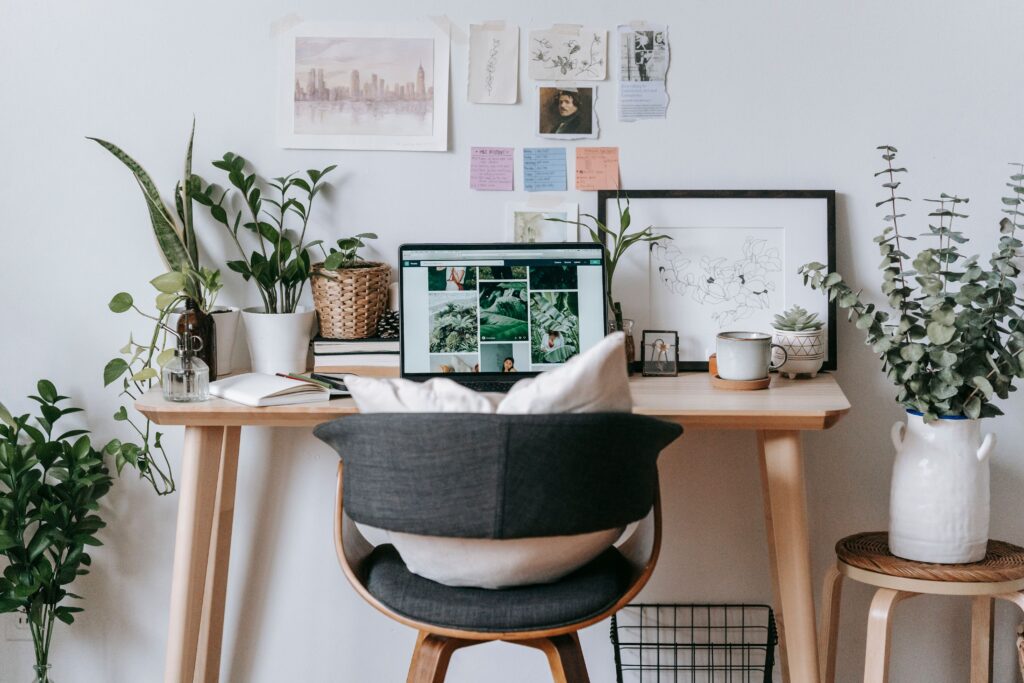
A: A virtual background on Zoom or Teams is the simplest solution — most video platforms offer this and it requires no physical change to your space. For those who prefer a real background, positioning your desk against a clean wall with intentional simple décor — a plant, framed art, a clean bookshelf — provides a professional background that communicates care and competence without requiring a dedicated staged area. Avoid positioning that puts cluttered living space, kitchen areas, or bedroom elements in your call background regardless of how tidy the rest of your apartment is.
Q: What is the minimum desk size that creates a functional home office?
A: A 40 by 20-inch desk surface accommodates a laptop or single monitor, keyboard, mouse, and basic desktop accessories adequately for most remote work setups. A 48 by 24-inch surface is significantly more comfortable for full-day work sessions. The desk depth — the front-to-back measurement — matters more for comfort than the width because adequate depth prevents the eye strain that a monitor placed too close to the face causes during extended work sessions.
Q: How do I separate work time from personal time when they happen in the same space?
A: The behavioral boundary is as important as the physical one. Defined work hours that you commit to starting and ending regardless of the proximity of the desk, the end-of-day shutdown routine that physically closes or clears the workspace, and the deliberate transition activity between work and personal time — a short walk, a workout, a changed outfit — provide the psychological separation that physical commuting creates for office workers and that the apartment-based remote worker must create deliberately through routine rather than geography.
Conclusion
Knowing how to create a home office in a small apartment is ultimately about intention — the deliberate decisions about where work happens, how that space is organized, how it is separated from living space, and how the workday begins and ends with the physical and psychological clarity that productive remote work requires. The square footage is a constraint. The intention is not.
Apply these ten tips in whatever combination suits your specific apartment layout and your specific work requirements. Not every tip applies to every situation — the studio apartment solution looks different from the one-bedroom solution, which looks different from the shared apartment solution. But the underlying principles — dedicated zone, vertical organization, visual separation, cable management, lighting, and daily reset — apply consistently regardless of specific apartment configuration.
Your most productive remote work days are ahead of you. They just need the right space to happen in.
Explore the complete collection of apartment organization guides and resources at ApartmentOrganizerHub.com — Apartment Organizer Hub Blogs Page — for honest practical advice on every small space challenge your apartment presents. For the storage solution that uses the corners your home office setup leaves unused check out our complete guide to the best corner shelving units for small apartments — 6 brilliant picks that transform dead corners into beautiful organized storage.