Decorating a small apartment on a budget is one of the most creatively rewarding challenges any apartment dweller can take on. According to research published by the American Institute of Architects, the visual environment of the spaces we inhabit directly affects mood productivity stress levels and overall wellbeing — making intentional apartment decoration a genuine quality-of-life investment rather than a purely aesthetic indulgence for apartment dwellers who spend significant time in their homes.
The small apartment that feels like a temporary holding space you are tolerating until something better comes along produces genuinely different daily wellbeing outcomes than the small apartment that feels like your home — the space you have intentionally made beautiful and personal regardless of its size or your budget.
The best small apartment decoration is not about spending money on expensive furniture and designer accessories — it is about understanding the specific visual and spatial principles that make small spaces feel larger more beautiful and more personally expressive than their dimensions alone suggest. Every tip in this guide works within rental apartment constraints requiring no permanent modifications and no decorating budget beyond what you can genuinely afford.
Tips on How to Decorate a Small Apartment on a Budget
Following tips can answer most of your questions on how to decorate a small apartment on a budget:
Tip 1 — Use Mirrors Strategically to Double Your Perceived Space
Mirrors are the single most powerful tool in small apartment decoration — the budget-accessible element that creates the perception of doubled space through light reflection and visual depth that no other single decoration choice matches for spatial impact per dollar spent.
The mirror placement that produces the most significant space-expanding effect positions large mirrors on walls that reflect natural light sources — the mirror opposite a window that bounces window light throughout the room creating the bright airy feel that dark small rooms cannot achieve without this optical assistance. A mirror reflecting a window also creates the visual illusion of an additional window in a room — the second light source impression that dramatically changes the feel of naturally dark apartments.
Large format mirrors — floor-to-ceiling leaned against a wall or mounted full wall in a bathroom or bedroom — create the most dramatic spatial expansion effects available from any single decoration element. Thrift stores and online marketplace platforms consistently offer large mirrors at a fraction of retail prices — the budget decoration source that makes mirror decoration accessible regardless of decorating budget.
Groupings of smaller mirrors arranged in a gallery wall format create similar spatial expansion effects at even lower individual piece cost — the collection approach that produces the large-mirror visual impact from individual pieces that each cost very little.
Tip 2 — Create a Cohesive Color Palette of Three Colors Maximum
Color is the decoration element that most significantly affects how a small apartment feels without any furniture purchase or spatial change — and the most common color mistake in small apartment decoration is using too many colors that create visual fragmentation rather than the cohesive visual flow that makes small spaces feel larger and more intentional.
The three-color palette rule produces the most universally successful small apartment decoration outcome — a dominant color that covers approximately 60 percent of visible surfaces a secondary color that covers approximately 30 percent and an accent color that covers the remaining 10 percent in pillows artwork and decorative objects. This ratio produces the visual coherence that allows the eye to move smoothly around the room rather than the stop-start visual rhythm that many competing colors create in small spaces.
Neutral dominant colors — warm whites cream tones soft grays and warm beiges — produce the most universally space-expanding effects for the dominant 60 percent because they maximize light reflection and minimize the visual weight that darker dominant colors add to rooms whose limited square footage benefits from visual lightness rather than heaviness.
The accent color is where personal expression and visual interest live — the specific color that reflects your personality and preference chosen deliberately rather than accumulated through whatever was on sale when each piece was purchased.
Tip 3 — Invest in One Statement Piece Rather Than Many Mediocre Pieces
The most common budget decoration mistake is purchasing many cheap mediocre pieces that collectively cost as much as one genuinely good piece would have — the accumulation approach that produces a space filled with objects whose individual quality undermines the visual impression of the whole regardless of how many there are.
One genuinely beautiful piece — a quality sofa in the right color a striking piece of wall art that commands attention or an interesting vintage rug that grounds the living room — makes a more significant contribution to a space’s decoration quality than ten equally priced mediocre alternatives whose combined visual weight creates visual clutter rather than visual interest.
Save for the one or two pieces that will define your apartment’s character rather than filling every available surface and wall with affordable options that individually do not contribute meaningfully to the space’s overall quality. Empty space in a well-decorated apartment is intentional and positive — the breathing room that makes each deliberate piece more impactful rather than the gap that indiscriminate filling eliminates.
Thrift stores vintage markets and online secondhand platforms provide the access to quality pieces at budget prices that makes the one-quality-piece approach accessible regardless of budget — a genuinely excellent vintage rug a quality mid-century side table and a striking piece of original art collectively available for the price of several new mediocre equivalents from budget home stores.
Tip 4 — Use Plants as Living Decoration
Plants are among the highest-return decorating investments available for any apartment budget — living decoration that adds color texture natural beauty and air quality improvement simultaneously at lower cost than equivalent visual impact from inanimate decoration alternatives.
The specific plant selection that works best for apartment decoration depends on the light conditions your apartment provides — the natural light that plants require for healthy growth determining which plants thrive in your specific windows and which decline regardless of care quality. Low-light tolerant plants including pothos snake plants ZZ plants and peace lilies suit the moderate natural light that most apartment interiors receive beyond the immediate window zone.
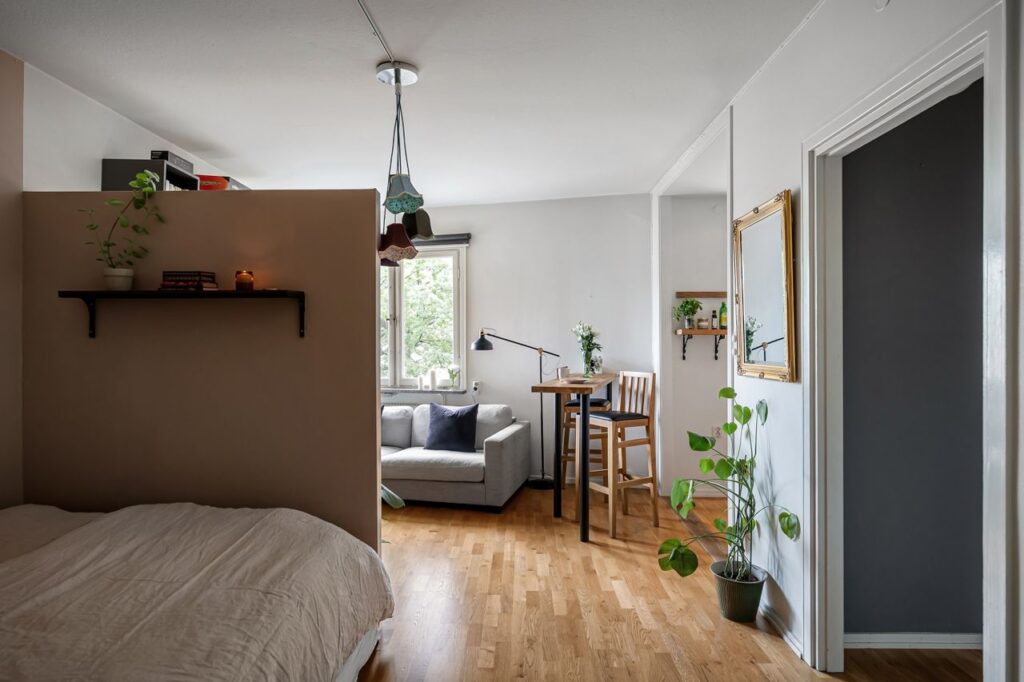
Plant placement that maximizes decoration impact positions plants at different heights throughout the room — floor-level large plants in corners that fill vertical space shelf-level medium plants that add greenery to horizontal surfaces and hanging plants in macrame or ceiling hooks that introduce the overhead element that furniture-level decoration alone leaves empty.
The decoration principle that guides effective plant integration is using plants to add life and color to the dead corners and empty surfaces that furniture arrangement leaves — the areas where a plant’s natural organic form provides exactly the visual interest and vitality that geometric furniture and flat surfaces cannot.
Tip 5 — Create Gallery Walls with Rental-Friendly Hanging Solutions
Gallery walls — curated collections of framed artwork photographs and prints arranged together on a wall surface — are among the most personalizing and visually impactful decoration additions available for any apartment budget. The rental-friendly hanging solutions that allow gallery wall installation without permanent wall damage make this decoration approach accessible in apartments where nailing is restricted.
Command strips and adhesive picture-hanging strips hold frames of appropriate weights without nails — the rental-safe hanging solution that accommodates most standard frame weights within their rated capacities. For heavier frames the tension rod gallery alternative uses horizontal tension rods from which frames hang on hooks or clips — the completely damage-free gallery display that accommodates heavier artwork without any wall contact beyond the tension rod tips.
Gallery wall curation that produces the most visually cohesive result uses a common element across all pieces — consistent frame color consistent mat color or consistent subject matter — that creates visual unity from varied individual pieces. A gallery wall of mismatched frames in inconsistent sizes with no common visual element reads as random accumulation rather than curated collection regardless of how good individual pieces are.
Affordable gallery wall content includes printed photographs personal art downloadable digital prints from online marketplaces vintage illustrations from thrift stores and postcards from meaningful places — the personal and meaningful content that makes gallery walls genuinely decorative rather than generic.
Tip 6 — Layer Lighting for Warmth and Atmosphere
The overhead fluorescent or single-bulb lighting that most apartments provide as standard produces the flat institutional light quality that makes apartments feel like offices rather than homes regardless of how well-decorated the furniture and surfaces are. Lighting is the decoration element whose improvement produces the most dramatic atmosphere improvement for the investment — the single change that transforms a space’s feel more completely than almost any furniture or surface decoration change.
Layered lighting — the combination of ambient overhead light warm-toned floor lamps table lamps and accent lighting that creates graduated illumination throughout the room — produces the warm atmospheric quality that flat overhead-only lighting cannot achieve regardless of bulb choice. The standard single overhead light with warm-tone bulb alongside one floor lamp and one table lamp produces the layered lighting that most dramatically improves small apartment atmosphere at minimal cost.
Warm color temperature bulbs — the 2700K to 3000K Kelvin range that produces the warm yellowish light that resembles candlelight and incandescent bulbs — create significantly more inviting and aesthetically pleasing atmosphere than the cool white or daylight bulbs that produce the blue-toned office light quality that many apartments default to.
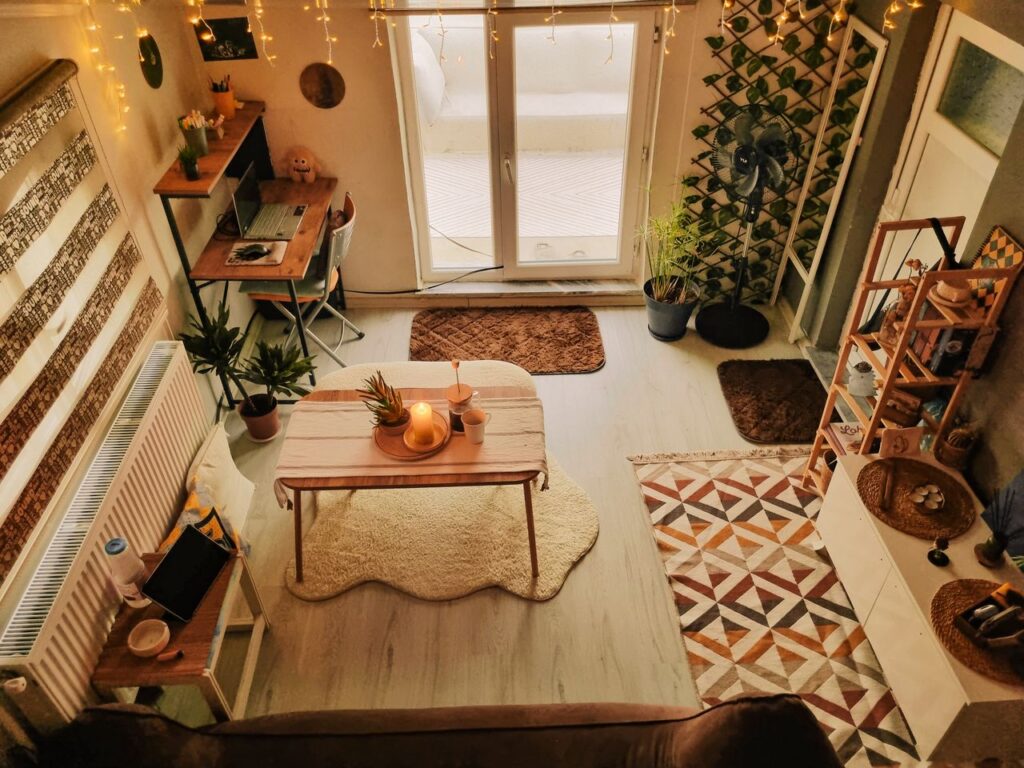
String lights fairy lights and LED strip lighting provide accent illumination that creates atmosphere without the furniture-scale investment that floor lamps and table lamps require — the inexpensive lighting addition that produces warmth and visual interest in corners shelves and above-bed wall areas at very low cost.
Tip 7 — Use Rugs to Define Zones and Add Warmth
Rugs are the horizontal decoration element that most significantly transforms the feel and visual organization of small apartments — the textile that adds warmth texture color and zone definition that hard floor surfaces alone cannot provide regardless of their quality.
In studio and open-plan apartments rugs perform the zone-definition function that walls would normally serve — a rug under the sofa and coffee table defines the living area while a different rug under the dining table defines the eating area within the same open-plan space. This zone definition creates the sense of distinct functional areas within a shared space that makes open-plan apartments feel more organized and intentional than the undefined expanse that rug-less open-plan interiors produce.
Rug sizing is the most common mistake in apartment rug use — the undersized rug that floats in the middle of a furniture arrangement without anchoring it properly. The correct rug size for a living area has the front legs of all major seating furniture on the rug — the anchoring that creates the visual connection between rug and furniture that makes both look intentional rather than accidentally placed.
Layered rugs — a larger neutral base rug with a smaller more decorative rug placed on top — provide the visual interest and texture variety that single rugs alone do not match while also allowing the larger base rug to be a less expensive neutral option with the smaller layered rug being the investment decorative piece.
Tip 8 — Declutter as the Foundation of All Decoration
The most beautifully decorated small apartment cannot overcome the visual chaos that excessive clutter creates — the accumulated objects without designated homes that undermine every deliberate decoration choice regardless of how thoughtful those choices are. Decoration and organization are not separate activities in a small apartment — they are interdependent systems where the organization quality determines the ceiling that decoration can reach.
Before any decorating investment assess every object in your apartment against the question of whether it is either genuinely used regularly or genuinely beautiful to you — the two criteria that justify the visual presence of any object in a small space where every visible surface contributes to the overall visual impression. Objects that are neither used regularly nor genuinely beautiful are the objects whose removal creates more decoration improvement than any addition could provide.
The empty surface that decluttering creates is not a decoration problem to be solved — it is a decoration success to be appreciated. The side table with one beautiful object creates more visual impact than the same side table covered with eight accumulated items of mixed quality and relevance. Every deliberate decoration choice operates most effectively against the clean visual background that intentional decluttering provides.
Tip 9 — Shop Secondhand First for Every Major Piece
The decoration quality accessible through secondhand and vintage purchasing at a given budget consistently exceeds what the same budget produces through new retail purchase — the quality-per-dollar advantage of secondhand shopping that transforms modest decoration budgets into genuinely beautiful apartment results.
The specific secondhand sources that provide the best decoration value are thrift stores for textiles frames small decorative objects and occasional furniture finds online marketplace platforms for furniture rugs and larger items whose condition photographs allow reasonable purchase confidence estate sales for vintage furniture and genuinely quality decorative objects at prices below their actual value and Facebook Marketplace for local furniture transactions that avoid shipping costs.
The secondhand shopping approach that produces the best results shops with a specific need and aesthetic in mind rather than browsing without direction — the targeted shopping that identifies genuinely useful pieces quickly rather than the accumulation of secondhand objects that do not serve a specific decoration purpose despite their individual low cost.
Tip 10 — Embrace Minimalism as a Deliberate Choice Rather Than a Limitation
The most transformative perspective shift available to small apartment dwellers is reframing the space and budget constraints that apartment living imposes as the creative parameters that make decoration decisions more intentional rather than the limitations that prevent the decoration that larger spaces and bigger budgets would allow.
Small apartments decorated with genuine intentionality — every piece chosen deliberately for its specific contribution to the space’s overall quality and personal expression — consistently feel more beautiful and personally meaningful than large apartments furnished indiscriminately through budget availability rather than deliberate choice. The constraint that small apartment decoration imposes is the productive creative constraint that prevents the default to filling space that larger spaces encourage.
The minimalist apartment is not the empty apartment — it is the apartment where every visible element is there because someone decided it should be rather than because it accumulated without intentional placement. This decisive intentionality is the decoration principle that works most powerfully in small spaces where every object’s visual contribution matters more than it would in larger rooms where individual pieces compete for attention less directly.
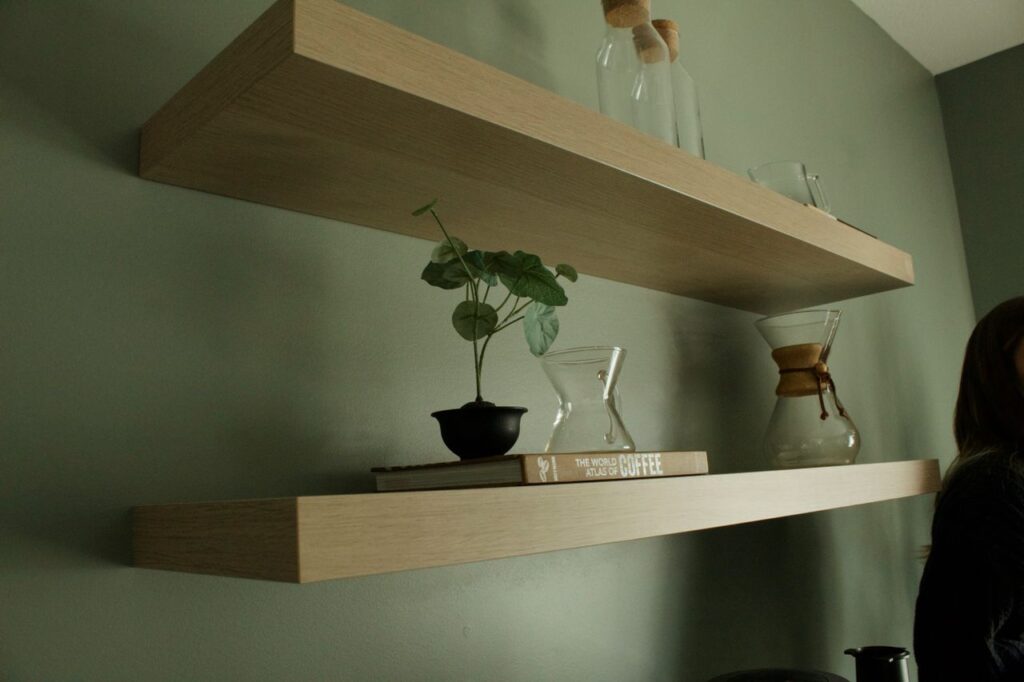
A beautifully decorated small apartment is not about how much money you spend — it is about how intentionally you deploy the space color light and objects available to you within whatever budget you have. And for the wall decor that adds visual interest and personality without drilling check out our complete guide to the best floating shelves for apartments under $50 — beautiful display storage that doubles as wall decoration in any apartment room.
All decorating tips in this guide work within standard rental apartment constraints — no permanent modifications required. For the storage solutions that keep your beautifully decorated apartment organized and clutter-free check out our complete guide on how to maximize storage in a small apartment — 10 proven tips that work in every room alongside your new decoration approach. And for the storage decision that most affects both the organization and the visual appearance of your decorated apartment check out our complete comparison of open shelving vs closed cabinets for small apartments — the honest guide that helps you choose the right storage approach for every room.