Knowing how to maximize storage in a small apartment is the single most impactful organizational skill any apartment dweller can develop. According to the National Association of Professional Organizers, the average apartment dweller uses only 60% of their available storage space effectively — leaving 40% of existing storage capacity untapped through poor organization rather than genuine storage insufficiency. The feeling of insufficient apartment storage that most small space dwellers experience is almost always a symptom of disorganized existing space rather than genuinely inadequate storage volume — a problem that intelligent organization addresses more effectively than square footage alone ever could.
Knowing how to maximize storage in a small apartment transforms your relationship with your living space — from constant frustration with insufficient room for your belongings to confident comfort in an organized functional home that accommodates everything you need within its existing dimensions. Every tip in this guide on how to maximize storage in a small apartment has been proven to work in real apartments without renovation structural modification or significant financial investment.
Why Small Apartment Storage Feels Insufficient Even When it is Not?
Before diving into the specific tips that maximize storage in a small apartment it helps to understand why most small apartment storage feels inadequate even in apartments that have sufficient volume to accommodate their residents’ belongings comfortably.
Unused vertical space — The average apartment uses only the bottom five to six feet of available room height for storage — leaving the significant wall space above this level completely empty. A room with eight-foot ceilings has nearly three feet of vertical space above the standard storage zone that represents meaningful additional capacity when properly utilized.
Inefficient existing storage — Standard apartment closets cabinets and shelving typically use only 40 to 50 percent of their actual interior volume through poor organization that creates dead space behind items at the back of shelves and above single-layer item arrangements that do not use full shelf height.
Missed opportunity spaces — The space under every bed behind every door above every toilet and in every room corner represents storage opportunity that most apartment dwellers leave completely unused while simultaneously feeling they have insufficient storage throughout their home.
Understanding that the problem is organization rather than volume is the mindset shift that makes every tip in this guide genuinely actionable — you are not adding storage you are activating the storage you already have.
Tips on how to maximize storage in a small apartment
Following are some tips, if followed, can help you fully maximize storage in your apartment.
Tip 1 — Declutter Before Organizing
Knowing how to maximize storage in a small apartment starts with the step most people skip — you cannot effectively organize possessions that exceed your apartment’s reasonable storage capacity regardless of how cleverly you organize the remaining space. Before implementing any organizational system conduct an honest audit of everything you own.
For every item ask three questions — do I use this regularly does it genuinely add value to my life and would I replace it if I had to start fresh? Items that fail this audit leave the apartment through donation sale or disposal before any organizational system is implemented.
The decluttering step consistently frees 20 to 30 percent of effective storage capacity before any organizational purchase or rearrangement begins — making it the highest-return investment of time in any small apartment storage maximization project. Trying to organize too many possessions into insufficient organized space produces temporary improvement that collapses back into chaos within weeks.
Tip 2 — Use Vertical Space Aggressively Throughout Your Apartment
The most impactful single strategy for maximizing storage in a small apartment is vertical space utilization — the deliberate installation of storage solutions that capture wall height above the standard five to six-foot storage zone that most apartments use exclusively.
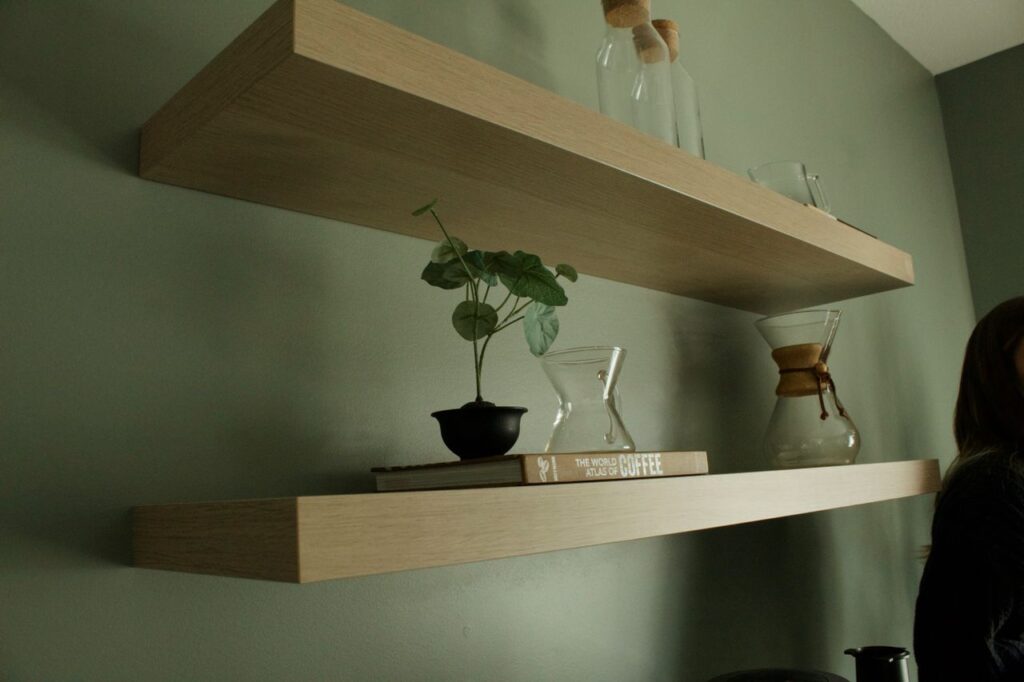
Install floating shelves on available wall space in every room — living room kitchen bedroom and bathroom walls all offer meaningful vertical storage opportunities that floor and counter space cannot provide. The wall space above your sofa above your desk above your dresser and above your toilet all represent untapped storage and display capacity that floating shelves convert into functional organized space.
Stack storage furniture to the ceiling rather than stopping at eye level — bookcases wardrobe units and shelving systems that reach ceiling height store two to three times the volume of equivalent furniture that stops at standard furniture height. The visual effect of ceiling-height storage also makes rooms appear taller and more spacious rather than cramped.
Tip 3 — Transform Under-Bed Space into Primary Storage
The space under every bed in your apartment is the most consistently underutilized storage area in any living space. The average queen bed provides approximately 30 cubic feet of storage space that most apartment dwellers leave completely empty while simultaneously struggling with insufficient storage throughout their home.
Use this space for seasonal storage rotation — winter clothing during summer months summer clothing during winter bulky bedding between seasons and holiday items between celebrations. The under-bed storage that handles seasonal rotation frees closet and cabinet space for current-use items that benefit from more accessible storage positions.
Choose flat wheeled containers that slide out effortlessly for under-bed storage — the accessibility convenience of wheeled storage determines whether under-bed space gets used consistently or gets forgotten and left empty after initial implementation.
Tip 4 — Choose Multi-Function Furniture for Every Major Furniture Purchase
Every significant furniture purchase in a small apartment should serve at least two functions simultaneously — the floor space that any furniture piece occupies is too precious in small apartment living to be consumed by single-function items when multi-function alternatives deliver equivalent primary function alongside meaningful secondary benefit.
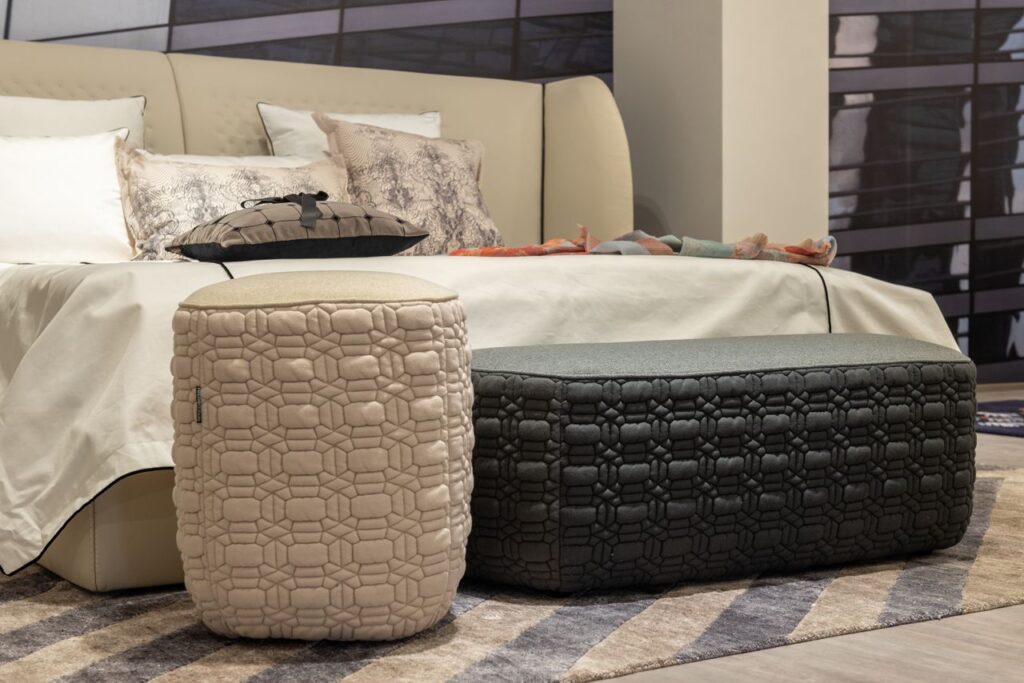
Storage ottomans that serve as coffee tables seating and hidden storage simultaneously replace both a coffee table and a storage unit in one footprint. Bed frames with integrated drawer storage beneath replace both a bed frame and a dresser in the same floor area. Dining tables with built-in storage replace both a dining table and a sideboard in one piece. Sofa beds replace both a sofa and a guest bed in the same floor position.
Every furniture replacement and new purchase decision should start with the question — does a multi-function alternative exist that delivers the same primary function alongside meaningful storage secondary benefit without significantly compromising either function?
Tip 5 — Maximize Door Space Throughout Your Apartment
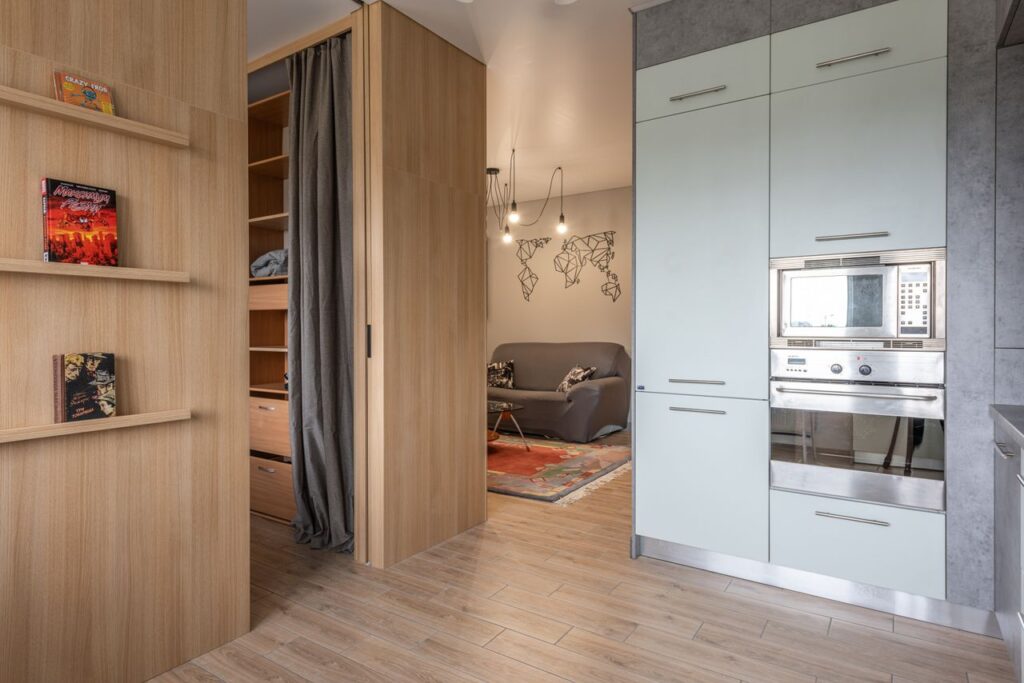
Every door in your apartment represents a storage surface that is currently completely unused — the back face of closet doors bathroom doors pantry doors bedroom doors and office doors all offer meaningful storage capacity that over-door organizers convert into immediately accessible organized storage without any floor or wall space consumption.
Over-door organizers require no drilling no installation tools and no permanent modification — hanging securely on door tops through hook designs that remove completely without any trace when needed for apartment moves or lease inspections. This no-modification installation makes them among the most rental-friendly storage solutions available for storage-constrained apartment dwellers.
The category of items stored on each door should match the room the door belongs to — bathroom essentials on the bathroom door pantry items on the kitchen door cleaning supplies on the utility closet door and clothing accessories on the bedroom closet door. This room-specific organization keeps stored items contextually relevant to their door location.
Tip 6 — Implement Zone Organization in Every Room
Zone organization — the deliberate grouping of related items in dedicated zones based on where they are used rather than where they physically fit — is the organizational principle that most dramatically improves daily apartment living efficiency when applied consistently throughout a small space.
Every room should have clearly defined zones for different activity categories — the bedroom zone for sleeping includes bedside essentials and sleep-related items the bedroom zone for dressing includes accessible clothing and accessories and the bedroom zone for reading or working includes the relevant tools for those activities. This zone clarity eliminates the cross-room item searching that disorganized apartments consistently require for daily activities.
Zone organization also naturally reveals which items are stored far from where they are used — the kitchen tool stored in the bedroom the cleaning supply stored in the living room — and prompts the relocation to appropriate zones that reduces the daily movement and searching that misplaced items create.
Tip 7 — Use the Space Above Cabinets and Wardrobes
The space between the top of your cabinets wardrobes and refrigerator and the ceiling above them represents significant storage volume that most apartment dwellers leave completely empty — assuming it is inaccessible when in reality it accommodates meaningful quantities of infrequently used items with minimal access effort.
Large baskets and labeled boxes positioned above kitchen cabinets store seasonal appliances holiday serving pieces and infrequently accessed items. Luggage positioned on top of wardrobes stores itself rather than consuming closet or under-bed space. Decorative storage boxes above the refrigerator organize the miscellaneous kitchen items that lack dedicated cabinet homes.
The key to making above-cabinet storage work is organization and labeling that makes retrieval possible without removing everything to find a specific item — clear labeled boxes that allow contents identification from ground level maintain the usability of this storage zone through the occasional retrieval that infrequently used items require.
Tip 8 — Optimize Closet Space with Dedicated Systems
The standard closet configuration that apartments provide — a single hanging rod and one shelf above it — uses only 30 to 40 percent of the available closet volume through the significant wasted space below short hanging garments and the unused vertical space above the single shelf.
Adding a second hanging rod beneath shorter garments doubles hanging capacity in the same closet footprint. Adding shelf dividers and stackable organizers to the existing shelf multiplies usable shelf capacity. Adding a floor-level shoe rack or drawer unit utilizes the closet floor space that standard configurations leave empty beneath hanging garments.
The complete optimization of a standard apartment closet through these additions typically doubles or triples the functional storage capacity of the closet without any structural modification — converting what feels like insufficient closet space into genuinely adequate storage for a well-edited wardrobe and accessory collection.
Tip 9 — Create Dedicated Homes for Everything You Own
The single most important organizational principle for maximizing storage in a small apartment is ensuring that every item you own has a clearly defined specific home rather than a general area where it approximately belongs. Items without specific homes migrate to surfaces create clutter and make spaces feel disorganized regardless of how much storage is technically available.
The dedicated home principle requires organization at the item level rather than the category level — not all kitchen tools go in the kitchen drawer but the spatula goes in the front left of the kitchen drawer beside the tongs which go immediately to its right. This specificity sounds excessive but produces the automatic storage behavior that keeps small apartments organized through daily use without constant reorganization effort.
Label storage containers dedicated drawers and specific shelf zones — removing the memory requirement and decision-making delay that unlabeled storage creates during the daily item replacement that maintains organizational systems through consistent use.
Tip 10 — Maintain Your Storage System with Monthly Resets
Knowing how to maximize storage in a small apartment is only half the challenge. Maintaining the maximized storage state through daily life is the second half — the consistent habit that prevents the gradual drift back toward disorganization that captures even the best-implemented storage systems without maintenance.
Schedule a monthly 30-minute apartment storage reset — returning any misplaced items to their dedicated homes decluttering any new items that have entered the apartment without designated storage positions and adjusting any storage solutions that the past month’s experience has revealed as inadequate or inconvenient.
The monthly reset approach prevents the gradual accumulation of organizational drift that requires a complete reorganization effort when allowed to develop over months — the brief regular maintenance investment that preserves the maximized storage state indefinitely rather than requiring repeated major reorganization cycles.
Maximizing storage in a small apartment is not about having less — it is about using what you have more intelligently. And one of the most brilliant multi-function furniture investments you can make for small apartment living check out our complete guide to the best storage ottomans under $50 for seating storage and style combined in one space-efficient piece.
All tips in this guide on how to maximize storage in a small apartment are based on genuine research and real-world small space living experience. For the best under bed storage solutions that implement Tip 3 in this guide check out our complete guide to the best under bed storage solutions under $50 for smart accessible storage that transforms the most underused space in your apartment. For the most space-efficient seasonal storage solution available check out our complete guide to the best vacuum storage bags for clothes and bedding — compressing bulky seasonal items to a fraction of their size and instantly freeing massive storage space.