The open shelving vs closed cabinets debate is one of the most consequential storage decisions any small apartment dweller makes. According to interior design research published by the American Society of Interior Designers, storage visibility directly affects both the perceived organization of a living space and the daily stress level of its occupants — with visible clutter on open shelving producing measurably higher stress responses than equivalent clutter concealed within closed cabinets regardless of the actual quantity of items stored. Yet the visual spaciousness the display capability and the accessibility of open shelving produce genuine advantages over closed cabinet alternatives that make the choice more nuanced than the clutter-management argument alone suggests.
The open shelving vs closed cabinets for small apartments question does not have a universal answer — it has a correct answer for your specific apartment based on your organizational discipline your aesthetic preferences your rental agreement constraints and the specific room’s function and daily use patterns. This complete comparison gives you everything you need to make the right choice rather than the one that looks most impressive in design content that does not reflect the realities of small apartment daily living.
Understanding What Each Option Actually Provides
Before comparing specific attributes understanding the fundamental difference in what open shelving and closed cabinets each provide clarifies every comparison that follows.
Open shelving exposes stored items to complete visibility — the storage approach where everything on the shelf is visible from the room and where the shelf’s contents become part of the room’s visual landscape whether those contents are beautifully curated display objects or the accumulated miscellany that everyday use deposits on accessible storage surfaces.
Closed cabinets conceal stored items behind doors — the storage approach where cabinet contents are invisible from the room and where the cabinet’s exterior rather than its contents contributes to the visual landscape. The closed cabinet is only as visually good as its door front while the open shelf is only as visually good as its contents.
This fundamental difference in visibility is the root of every other meaningful comparison between the two approaches.
Open Shelving vs Closed Cabinets for Small Apartments — Different Comparisons
Following are described some comparisons of Open Shelving vs Closed Cabinets For Small Apartments, based on different aspects;
1. Visual Impact Comparison
Open Shelving Visual Impact
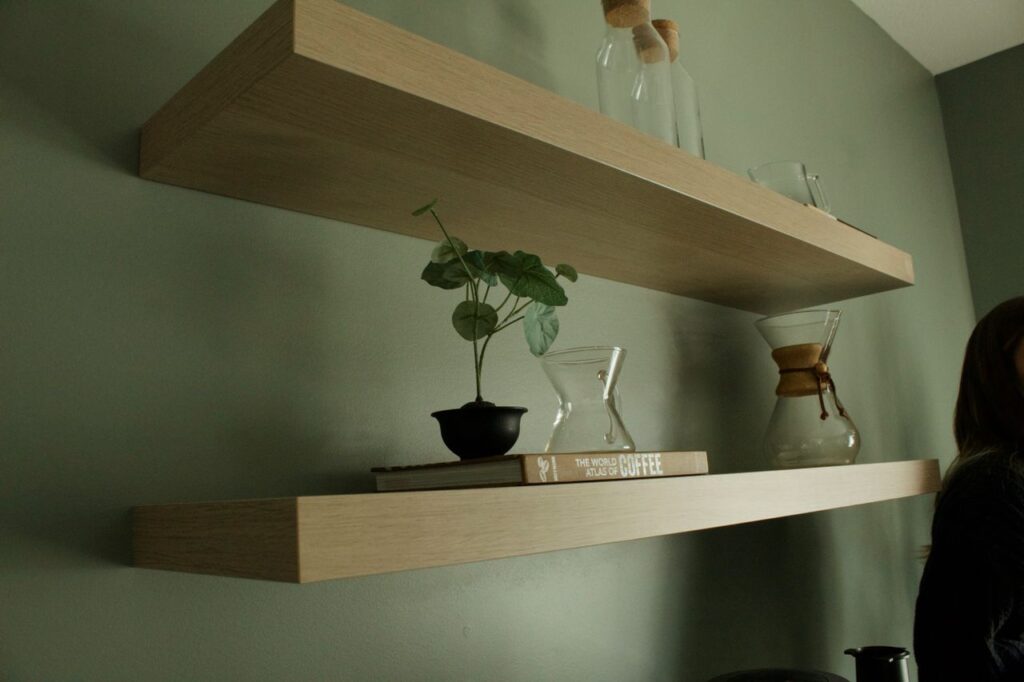
Open shelving’s visual impact potential is the reason it dominates design magazine kitchen features and social media apartment photography — a beautifully styled open shelf with carefully curated objects creates a visual richness and personal expression that closed cabinet doors simply cannot match. The design magazines are not wrong about this specific quality. A well-styled open shelf genuinely is more visually interesting than an equivalent closed cabinet.
The critical qualification is the consistently omitted context — those magazine shelves are styled by professional stylists for photographs and often unstocked with the actual daily-use items that real apartment kitchen and living room shelving must accommodate alongside the decorative objects. The open shelving that looks stunning in the photograph looks like the inside of a cluttered cabinet when stocked with the everyday items that real living produces.
Closed Cabinets Visual Impact
Closed cabinets contribute to visual calm rather than visual interest — the clean uninterrupted cabinet fronts that remove storage contents from the visual landscape entirely. In small apartments where visual simplicity is often a more achievable and more desirable aesthetic goal than visual richness the calm that closed cabinets provide suits the space’s proportions better than the visual complexity that open shelving adds.
The visual impact of closed cabinets depends primarily on the quality and design of the cabinet front — a beautiful shaker-door cabinet or a high-gloss modern door provides significantly more positive visual contribution than a flat generic door of lower quality. The investment in quality cabinet fronts therefore provides proportionally higher visual return than equivalent investment in open shelf content for apartment dwellers whose organizational realities limit their ability to maintain the curated perfection that open shelving requires.
Visual Impact Winner: Open shelving when beautifully styled and maintained. Closed cabinets when real-life daily use makes perfect curation unrealistic. Honest self-assessment of which describes your actual lifestyle is the deciding factor.
2. Storage Efficiency Comparison
Open Shelving Storage Efficiency
Open shelving is structurally less storage-efficient than closed cabinets for equivalent wall space because effective open shelf storage requires deliberate spacing between items that allows both visual access and physical retrieval without disturbing neighboring items. The visual crowding that efficiently packed open shelves create undermines both the aesthetic appeal that makes open shelving attractive and the practical accessibility that storage is supposed to provide.
Open shelves also cannot accommodate the full depth that equivalent cabinet interior space provides — items stored at the back of deep open shelves are visually obscured and physically difficult to access in ways that deep cabinet storage with clear fronts does not create. The effective storage depth of open shelving is therefore shallower than equivalent cabinet storage for items that need to be both visible and accessible simultaneously.
Closed Cabinets Storage Efficiency
Closed cabinets use their full interior depth for organized storage — the complete volume that the cabinet structure provides rather than the reduced effective depth that visibility requirements impose on open shelving. Items stored at the back of a well-organized cabinet with clear front items remain accessible through organized arrangement rather than the visual search that deep open shelf access requires.
The organizational systems that closed cabinet interiors accommodate — stacked containers labeled bins drawer organizers and shelf risers — allow significantly more items to be stored in equivalent wall space than open shelving where these organizational systems produce visual clutter rather than organized storage.
Storage Efficiency Winner: Closed cabinets — meaningfully more storage volume per equivalent wall space through full depth utilization and interior organizational system compatibility.
3. Maintenance Requirements Comparison
Open Shelving Maintenance
Open shelving requires maintenance that closed cabinets entirely eliminate — the regular dusting of every item on the shelf and the shelf surface itself that open exposure to room air and light demands. Items on open kitchen shelves also accumulate cooking grease and steam residue that require regular cleaning beyond simple dusting. Items on open shelves in any room collect the ambient dust that closed cabinet interiors avoid through door sealing.
The maintenance commitment of open shelving is the reality that design content consistently underrepresents because design photography shows the shelf at its best rather than after three weeks of normal life when the dust accumulation and item displacement from daily use have produced the less photogenic reality that open shelving maintenance prevents only through consistent deliberate effort.
Closed Cabinets Maintenance
Closed cabinets require only exterior door surface maintenance — wiping door fronts and handles — with interior cleaning needed only periodically rather than continuously. Items stored in closed cabinets accumulate no ambient dust requiring no individual item maintenance between the periodic cabinet reorganization that keeps interior organization functional.
The maintenance difference between open shelving and closed cabinets is particularly significant in kitchens where cooking grease and steam create the maintenance burden that open shelving requires managing continuously while closed cabinets contain the same residue on door exteriors that wipe-clean surfaces address easily.
Maintenance Winner: Closed cabinets — significantly lower ongoing maintenance requirement through exterior-only cleaning and interior dust protection.
4. Rental Compatibility Comparison
Open Shelving Rental Compatibility
Installing open shelving in a rental apartment requires wall drilling for mounting hardware — the permanent modification that most rental agreements prohibit and that creates the security deposit risk that damage or inadequate repair before move-out inspection triggers. Freestanding open shelving alternatives that do not require wall mounting provide open storage without installation but typically lack the visual integration with the wall that wall-mounted shelving provides.
Tension-rod mounted open shelf alternatives and ladder shelves that lean against walls without mounting provide no-drill open storage options — the rental-compatible alternatives that sacrifice some visual integration for installation freedom.
Closed Cabinets Rental Compatibility
Standard apartment closed cabinet infrastructure is provided by the landlord and requires no tenant installation — the built-in closed cabinet storage that most apartments provide as standard for kitchen and bathroom storage needs. The tenant contribution to closed cabinet storage is organizational system installation within existing cabinet interiors — the shelf risers and drawer organizers that require no wall contact and therefore create no rental agreement compliance concerns.
Rental Compatibility Winner: Closed cabinets when using landlord-provided built-ins. Tie for added storage — both require installation considerations with no-drill alternatives available for both open and additional closed storage needs.
5. Cost Comparison
Open Shelving Cost
Open shelves themselves are among the most affordable storage infrastructure available — basic floating shelves from under $20 to high-quality hardwood alternatives at $60 to $100 per shelf. The ongoing cost of maintaining open shelves aesthetically — the attractive containers coordinated display objects and periodic content curation — represents an additional investment that closed cabinet alternatives do not require for equivalent visual quality.
Closed Cabinets Cost
Adding closed cabinet storage beyond landlord-provided built-ins requires either freestanding cabinet furniture — typically $100 to $400 per unit — or the wall-mounted installation that rental agreements may not permit. The higher initial investment of closed cabinet furniture compared to open shelving represents the most significant cost disadvantage of the closed cabinet approach.
Cost Winner: Open shelving for initial storage infrastructure cost. Closed cabinets for ongoing maintenance and curation cost. The comparison depends on time horizon and lifestyle priorities.
Which Rooms Suit Each Approach Best?
The room-specific function and daily use patterns that each apartment room involves significantly affect which storage approach suits that specific room better — the context that makes a blanket apartment-wide preference for either approach less useful than room-by-room evaluation.
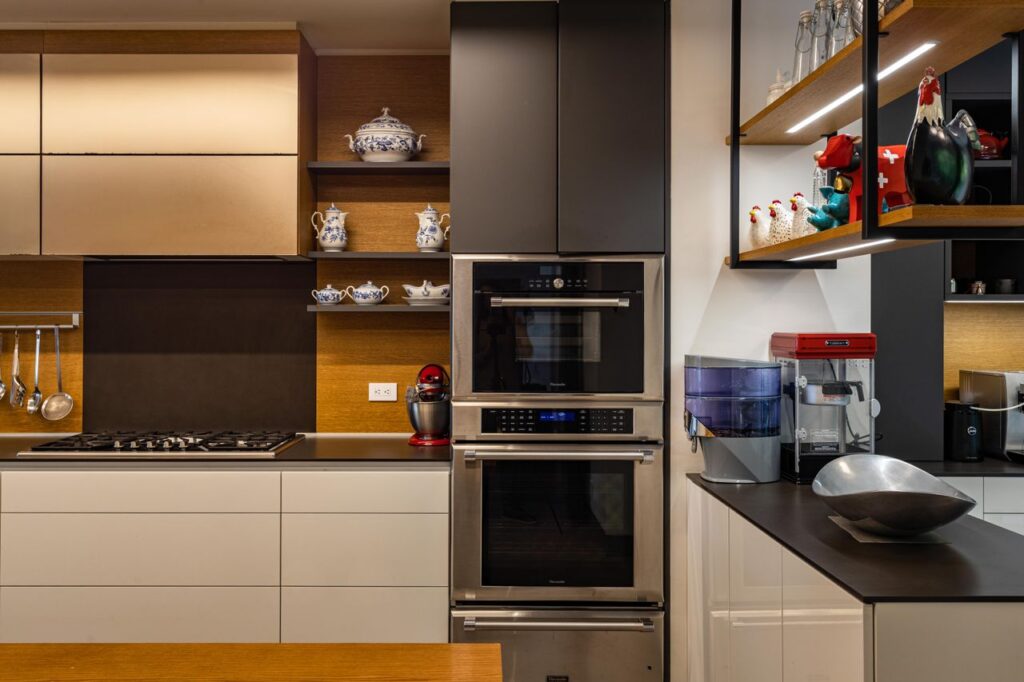
Kitchen — Closed cabinets suit most kitchen storage better than open shelving for most real apartment dwellers — the cooking grease steam and daily utensil retrieval that kitchen use involves making the maintenance burden of open kitchen shelving practically significant while the daily access frequency of kitchen storage makes the door-opening inconvenience of closed cabinets minimal through habit. The exception is a small curated collection of beautiful everyday items — a consistent set of matching mugs or a carefully selected collection of cookbooks — that open kitchen shelf display genuinely enhances rather than the mixed practical storage that kitchens realistically require.
Living Room — Open shelving suits living room display storage better than kitchen alternatives because living room items are typically selected for visual appeal and changed less frequently — the conditions that reduce the maintenance burden and curation challenge that open living room shelving requires compared to equivalent kitchen applications.
Bedroom — Closed storage suits bedroom wardrobes and dresser alternatives better than open alternatives for most people — the personal clothing and accessory storage that visual privacy and dust protection both argue for closed rather than displayed storage.
Bathroom — Closed cabinets suit bathroom storage better than open shelving — the personal care items that most people prefer concealed and the moisture environment that accelerates dust accumulation and product degradation on exposed shelving making closed cabinet storage the clear practical choice.
The Honest Recommendation for Small Apartments
For apartment dwellers who want the visual interest and display capability of open shelving without the installation requirements of wall-mounted alternatives check out our complete guide to the best floating shelves for apartments under $50 — the accessible rental-friendly options that provide open display storage without the installation commitment that permanent wall-mounting requires.
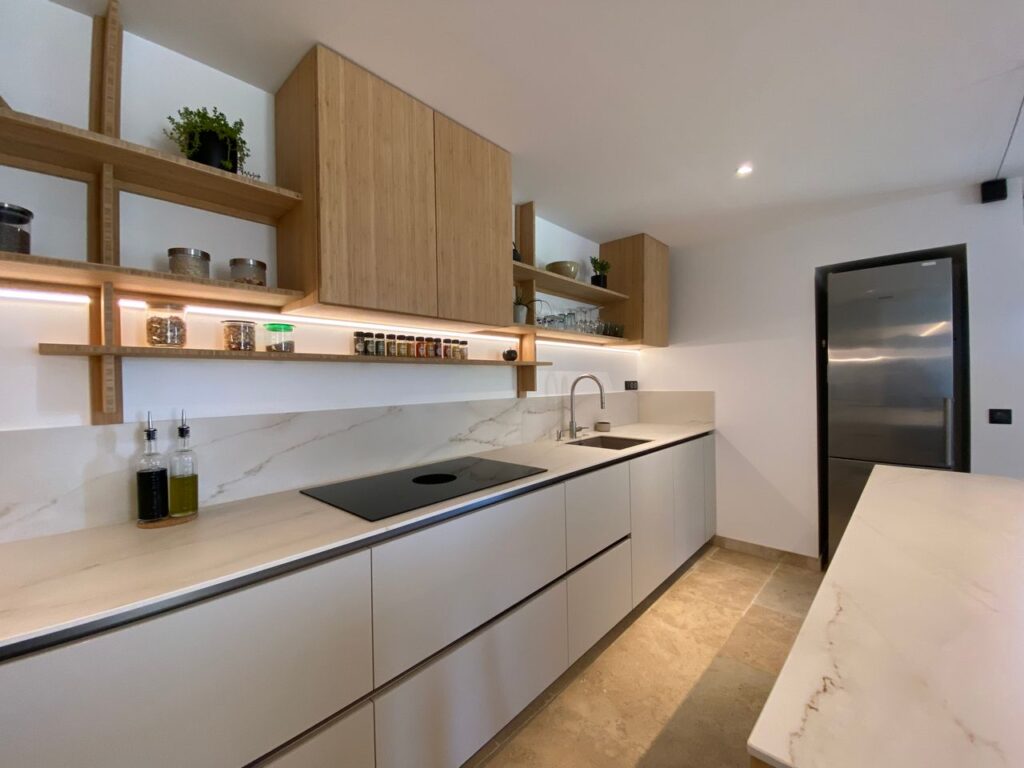
The smartest storage approach for most small apartments combines both open and closed storage in a deliberate ratio that suits your specific organizational discipline aesthetic preferences and the specific room’s function. For the most versatile modular storage furniture that combines both open and closed storage in one adaptable system check out our complete guide to the best cube storage organizers for apartments — open cubes for display and fabric bin cubes for concealed storage in one brilliantly flexible system.
Choose primarily open shelving if you have the organizational discipline to maintain curated beautiful shelf contents consistently you enjoy the styling process and find it sustainable alongside your lifestyle and the items you need to store are genuinely attractive enough to display rather than conceal.
Choose primarily closed cabinets if your daily lifestyle produces the item displacement and clutter accumulation that open shelving would make perpetually visible you prioritize low-maintenance storage over visual interest and your aesthetic preference favors the calm of clean surfaces over the visual richness of displayed collections.
Use both strategically if you want the visual richness of open display in the specific areas where you can maintain curated content — living room book collection or a beautiful kitchen dish collection — and the concealment of closed storage in the areas where daily use makes perfect curation unrealistic.
Frequently Asked Questions
Q: Can I add open shelving to a rental apartment without losing my security deposit?
A: Yes — through the no-drill installation alternatives that tension rod systems freestanding shelving units and adhesive mounting solutions provide. Wall-mounted floating shelves require drilling that most rental agreements prohibit but freestanding ladder shelves that lean against walls tension rod shelf systems and adhesive-mounted lighter shelves provide open storage display capability without permanent wall modification that deposit-deducting damage creates.
Q: How do I style open shelves so they do not look cluttered?
A: The styling principle that consistently produces the least cluttered open shelf appearance uses the rule of three — grouping items in odd numbers of three or five rather than even numbers uses negative space deliberately between groups rather than filling the shelf continuously and limits the color palette of displayed items to two or three coordinated colors rather than the visual fragmentation that many colors create. Books spine-forward with coordinated covers provide one of the most consistently attractive open shelf contents available because they naturally provide the color coordination and organized appearance that mixed-object collections require more deliberate curation to achieve.
Q: Do open shelves make small rooms look bigger or smaller?
A: Well-styled open shelves with appropriate negative space can make small rooms feel larger by adding visual depth and interest that draws the eye through the room rather than stopping at flat surfaces. Overfilled open shelves make small rooms feel significantly smaller by adding visual clutter that reduces the apparent spaciousness of the room regardless of its actual dimensions. The visual impact of open shelving on perceived room size depends entirely on how well the shelves are curated rather than the open shelving format itself.
Q: Which is better for resale value — open shelving or closed cabinets?
A: Closed cabinets consistently add more resale value than open shelving for owned apartments — the kitchen and bathroom closed cabinet storage that buyers evaluate for practical adequacy rather than aesthetic appeal. For rental apartments resale value is not relevant and the decision is purely lifestyle and aesthetic preference-based within rental agreement constraints.
Q: How do I choose between open and closed storage for a specific item collection?
A: Apply two questions to each collection. First — would I be comfortable with visitors seeing this collection exactly as it normally appears without any special tidying? If yes open storage suits it. If no closed storage suits it better. Second — does this collection change frequently through daily use in ways that disrupt organized appearance? If yes closed storage prevents the perpetual tidying that open storage of frequently accessed daily-use items requires.
Conclusion
The open shelving vs closed cabinets decision for small apartments is ultimately a question of honest self-assessment rather than aesthetic preference alone — the choice that best suits your actual daily lifestyle your realistic organizational discipline and your specific room’s function rather than the choice that looks most appealing in design content that shows idealized rather than realistic apartment living.
Use both deliberately — open shelving for the specific collections and rooms where you can genuinely maintain the curated appearance that open storage requires and closed cabinets for the storage that daily use makes impractical to maintain at open shelving’s display standard. The combination of both approaches applied strategically to each room’s specific needs produces the storage solution that is both more visually interesting than entirely closed alternatives and more practically manageable than entirely open alternatives.
Explore the complete collection of apartment organization guides and reviews at ApartmentOrganizerHub.com — Apartment Organizer Hub Blogs Page — for honest practical advice on every storage and organization decision your small apartment presents. And for the most versatile affordable storage addition for any apartment room check out our complete guide to the best stackable storage bins for apartments — 10 brilliant picks that maximize closet bedroom and living space without spending a fortune.