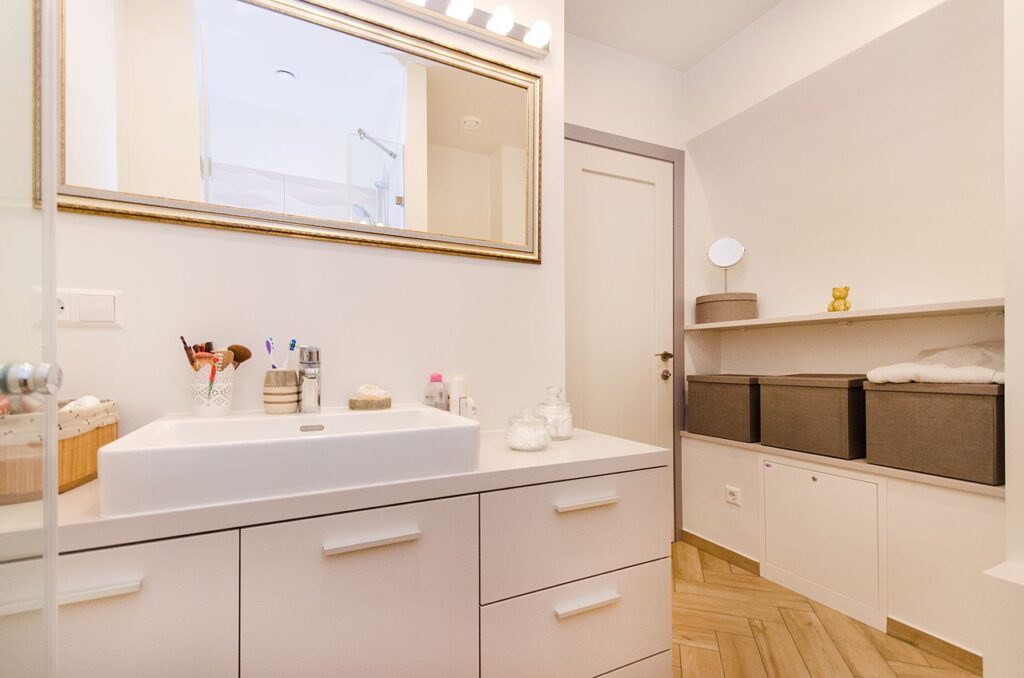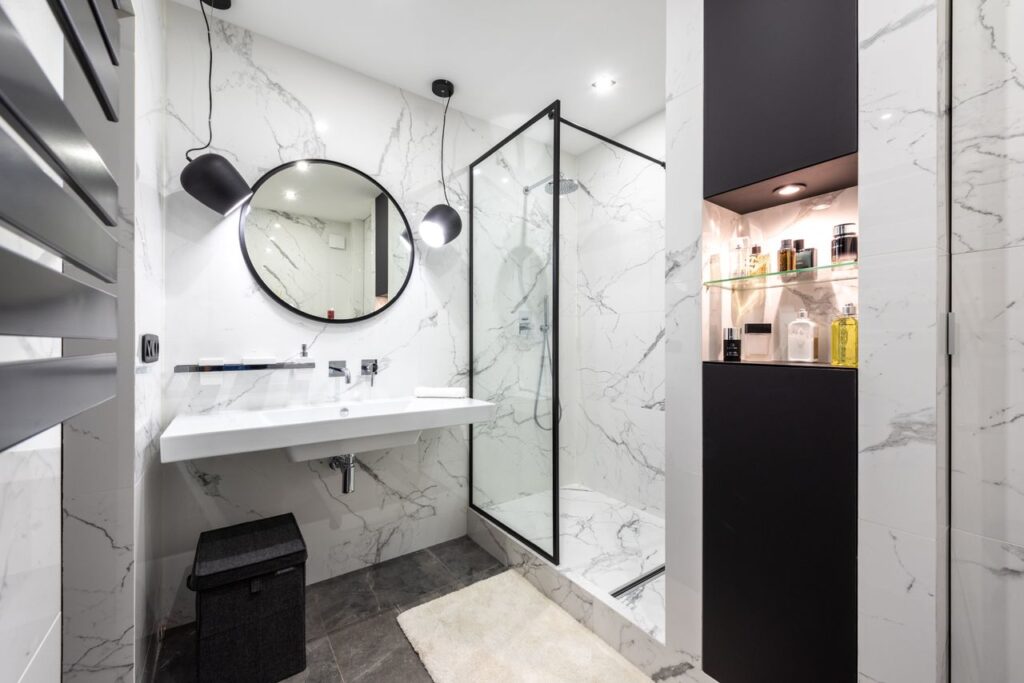
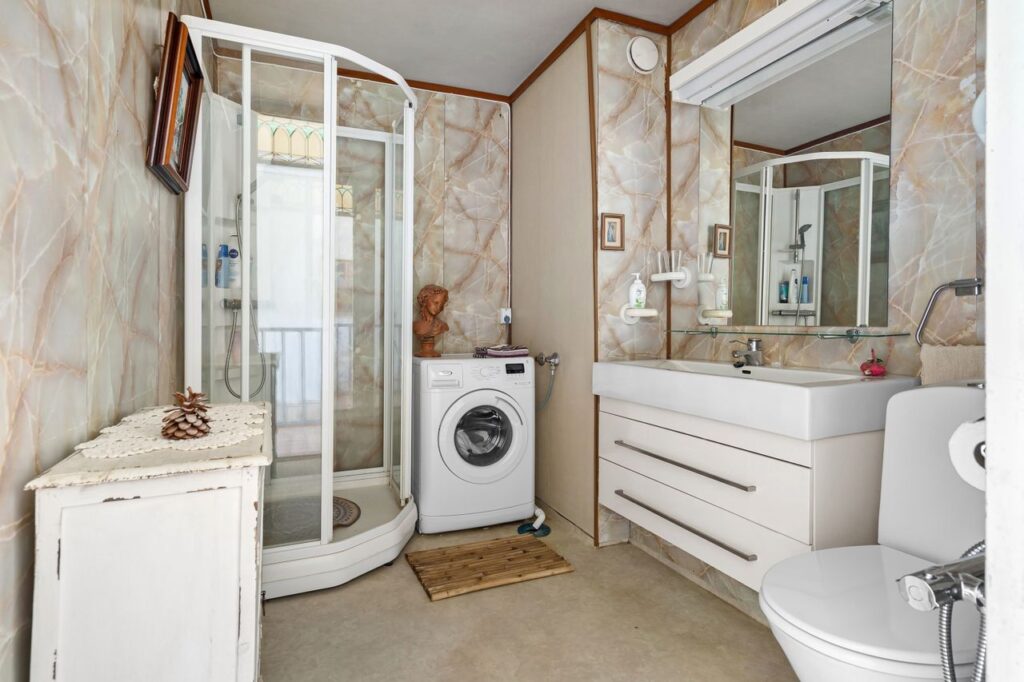
Organizing a small bathroom without extra space is one of the most universally experienced apartment living challenges. According to the National Kitchen and Bath Association, the average apartment bathroom provides less than 40 square feet of total floor space — yet most apartment dwellers store personal care products for multiple household members within this space alongside the essential fixtures that leave very little clear surface and floor area for the organized storage that daily bathroom routines require. The small bathroom that feels impossible to organize is almost always a bathroom whose available storage potential has not been fully recognized and utilized rather than a bathroom that genuinely lacks adequate space for its occupants’ storage needs.
Knowing how to organize a small bathroom without extra space means identifying and activating every storage opportunity that standard bathroom setup leaves unused — the wall space above the toilet the back of the door the inside of cabinet doors the shower walls and the vertical space above existing fixtures that most bathroom users leave completely empty while simultaneously feeling they have insufficient storage throughout the space. Every tip in this guide works within standard rental apartment bathroom constraints without permanent modification and without additional furniture that would further reduce the limited floor space that small bathrooms provide.
Proven Techniques on How to Organize a Small Bathroom
Following is the list of top tips on how to organize small bathroom:
Tip 1 — Install an Over-Toilet Storage Unit
The space above the toilet is the most consistently underutilized storage area in any bathroom — the vertical territory above a fixed fixture that most bathrooms leave completely empty despite providing significant storage capacity for the bathroom items that need organized accessible placement nearest the toilet position.
Over-toilet storage units — the freestanding shelved towers that straddle the toilet tank and build organized storage directly above the fixture — convert this empty vertical space into three to four shelves of organized bathroom storage without consuming any additional floor area. The over-toilet position is particularly logical for bathroom essentials including toilet paper spare hand towels cleaning products and the bathroom items that have no other natural home in small bathrooms with limited cabinet and counter space.
The freestanding over-toilet units that suit rental apartments require no wall attachment — the free-standing towers that balance on the toilet base sides without drilling or mounting hardware that rental agreements might restrict. The removal at move-out is as simple as lifting the unit away from the toilet without any wall repair requirement.
Tip 2 — Use the Back of the Bathroom Door
The back of the bathroom door is a storage surface that most bathroom occupants look at multiple times daily without recognizing the significant storage capacity it represents. An over-door organizer with pockets shelves or hooks that hangs over the top of the door without any mounting hardware converts this completely unused surface into organized storage for the personal care products medications hair accessories and bathroom items that need accessible placement without counter or cabinet space.
The over-door organizer format that works best for bathrooms uses clear pockets that provide visual contents identification without opening — the transparency that maintains the organizational clarity in the limited lighting that bathroom door interior positions sometimes receive. The hanging mechanism that hooks over the door top leaves no marks on any surface and removes instantly for apartment moving without any trace or repair requirement.
The door-back storage approach works particularly well for the categories of bathroom items that need frequent access but consume significant counter space when stored on available surfaces — the hairdryer the straightening iron the collection of hair products and the personal care items that each individually seem small but collectively consume counter space that small bathrooms cannot spare.
Tip 3 — Add Tension Rods Inside Cabinets
Tension rods installed horizontally inside bathroom cabinet interiors create additional storage tiers that multiply the usable capacity of standard single-shelf bathroom cabinets without any drilling or permanent modification. The same spring-tension mechanism that holds shower curtains and window treatments in place between two opposing surfaces creates organized horizontal dividers inside cabinet interiors that cost essentially nothing and install in seconds.
A tension rod installed in the cabinet under the bathroom sink at half the cabinet height creates a hanging position for cleaning spray bottles — the trigger handles that hang over the rod storing bottles vertically and clearing the cabinet floor of the bottles that normally pile on the bottom surface in precarious unstable groups that topple when any one is retrieved.
A tension rod installed inside a medicine cabinet or upper cabinet creates a second tier above the standard single shelf — the additional organization level that doubles the cabinet’s effective storage capacity through the vertical space above the existing shelf that single-tier organization leaves unused.
Tip 4 — Mount Magnetic Strips for Small Metal Items
Magnetic strips — the wall-mounted or adhesive-backed metal strips that hold metal items through magnetic attraction — provide the most creative bathroom storage solution for the small metal items that conventional storage poorly serves. Bobby pins hair clips nail files metal tweezers and the small metal accessories that disappear into drawers and bags organize instantly and visibly on adhesive-backed magnetic strips that stick to cabinet interiors tile backsplash areas and other smooth bathroom surfaces.
The adhesive-backed magnetic strip that suits rental apartments attaches without drilling or permanent surface modification — the removable adhesive that holds securely during use and releases cleanly at move-out without the surface damage that screw-mounted alternatives create. The small footprint of a magnetic strip accommodates dozens of small metal items in a few inches of wall or cabinet interior space — the most density-efficient storage solution available for the small metal accessory category.
Tip 5 — Maximize the Shower with Smart Caddies
The shower interior contains more organizational potential than the single built-in shelf that most apartment showers provide — the corner space wall space and showerhead position that caddy systems convert into organized multi-product storage without permanent modification.
Tension-mounted shower caddies that wedge between the floor and ceiling provide the most stable and highest-capacity shower storage without suction cups that fail or drilling that leases prohibit. The tension mount creates a floor-to-ceiling pole that provides multiple adjustable shelf positions for shampoo conditioner body wash razors and all the shower products that standard single shelves cannot organize adequately for households with multiple users.
Corner suction cup caddies provide the most space-efficient shower storage for households with fewer products — the corner position that uses the dead space where two shower walls meet and that keeps products organized and accessible without extending into the shower floor or wall space that movement requires during showering.
Tip 6 — Decant and Consolidate Products
The single highest-return bathroom organization improvement that costs nothing and requires no product purchase is honest product consolidation — the audit and elimination of duplicate expired and barely-used products that collectively consume the storage space that the items you actually use daily genuinely need.
The average bathroom contains significantly more products than its occupants use regularly — the accumulated personal care items from subscription deliveries trial sizes and product experiments that occupy drawer cabinet and counter space without contributing to daily routines. A systematic product audit that identifies everything currently stored in the bathroom and honestly evaluates what is used at what frequency produces the product count reduction that makes the remaining product set fit comfortably in available storage that the pre-audit quantity overcrowded.
Decanting products into uniform containers — matching pump dispensers for shampoo conditioner and body wash matching lidded containers for cotton balls and cotton swabs and matching small jars for the miscellaneous items that original packaging stores inefficiently — produces significant additional storage efficiency through the uniform container sizing that stacks and organizes more densely than the varied shapes and sizes of original product packaging.
Tip 7 — Use Vertical Wall Space with Adhesive Hooks and Shelves
Adhesive hooks and adhesive-mounted shelves that attach to tile and painted walls without drilling provide the wall storage addition that small bathrooms particularly benefit from without the rental agreement compliance concerns that drilled mounting creates. The adhesive mounting technology available in 2026 provides significantly more holding strength and cleaner removal than earlier generations — the current options reliably holding the bathroom items they are designed for without the failure and surface damage that earlier adhesive mounting products frequently produced.
Adhesive hooks on shower tiles hold loofahs razors and shower accessories in the shower space itself — the positions that keep these items organized and drip-dry without consuming shelf or caddy space. Adhesive hooks beside the mirror hold hair tools by their handles in immediately accessible positions that eliminate the drawer rummaging that stored-away hair tools require before every use.
Floating adhesive shelves above the toilet backsplash area or beside the mirror add horizontal storage surfaces in positions where no storage currently exists — the wall surface that adhesive mounting makes available for organized storage without the drilling that permanent shelf installation requires.
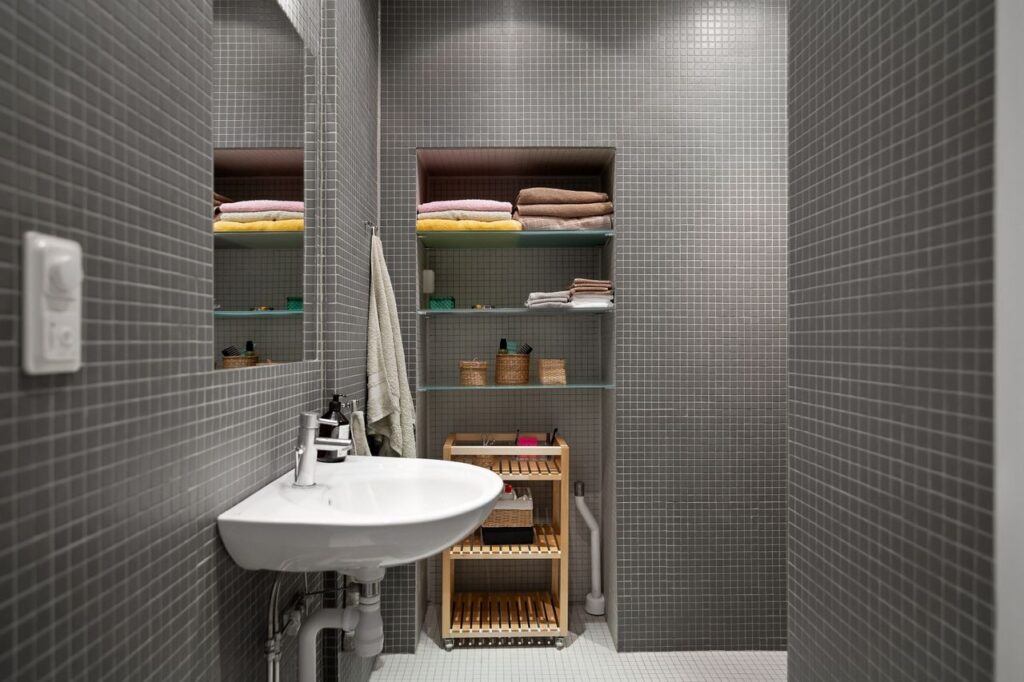
Tip 8 — Organize the Under-Sink Cabinet Systematically
The under-sink cabinet is the largest single storage space most apartment bathrooms provide and the most consistently poorly organized — the cabinet that most bathroom users treat as a dumping ground for items that have no other home rather than the systematically organized storage space that its volume represents.
The under-sink organization approach that produces the most usable improvement uses three specific organizing elements together. A two-tier shelf that fits around the plumbing pipes that occupy the cabinet center doubles the usable shelf space within the cabinet footprint. Pull-out drawer inserts that sit on the existing cabinet shelf provide front-to-back organization that makes rear-stored items accessible without removing front-stored items. Clear labeled bins that group related items into dedicated category positions prevent the mixed storage that makes finding specific items a search exercise regardless of how much organizing has been done to the container arrangement.
Tip 9 — Repurpose Non-Bathroom Storage Solutions
Some of the most effective small bathroom organization solutions are not marketed as bathroom products at all — the kitchen drawer organizers that fit medicine cabinet drawers perfectly the desk organizers that hold bathroom accessories in organized compartments and the pantry bins that suit under-sink category storage better than the bathroom-specific alternatives that cost more for equivalent function.
Kitchen drawer organizers provide the compartment sizing that bathroom drawer items — makeup hair accessories and small tools — need for organized individual placement. The utensil tray format that organizes silverware in kitchen drawers organizes beauty tools and accessories in bathroom drawers with equivalent effectiveness at lower cost than bathroom-specific organizers.
Lazy Susan turntables designed for kitchen cabinet organization suit the under-sink cabinet position equally well — the rotating platform that makes rear-stored under-sink items accessible without removing front items through 360-degree rotation that eliminates the reach-around that fixed-position alternatives require for rear item access.
Tip 10 — Establish a Regular Bathroom Declutter Routine
The organization systems implemented through the previous nine tips maintain their effectiveness only when the product accumulation that disorganizes them is managed through regular attention — the monthly bathroom audit that prevents the gradual drift back toward disorganization that all bathroom organization systems experience through the daily use and product acquisition that bathroom environments attract.
A monthly 15-minute bathroom audit covers three specific tasks — removing any products that have been used up or that have expired since the last audit returning any items displaced from their designated organizational positions through daily use and assessing whether any new products acquired in the past month have been assigned specific storage positions rather than the counter-top default that unassigned new items accumulate toward.
This monthly maintenance investment preserves the organizational clarity that the initial organization implementation produced — the 15-minute maintenance that prevents the two-hour reorganization that months of accumulated organizational drift eventually requires when regular maintenance is not performed.
A beautifully organized small bathroom is not about having extra space — it is about using every available inch of existing space more intelligently than standard placement allows. And for the shower organization specifically check out our complete guide to the best shower caddies under $50 — the shower storage solutions that keep every personal care product organized and immediately accessible within your shower space.
All organization tips in this guide work within standard rental apartment bathroom constraints — no permanent modifications required beyond what your specific lease permits. For the specific products that implement many of these tips check out our complete guide to the best bathroom storage solutions under $50 — the affordable products that add organized bathroom storage without drilling or permanent modification. And for wall mounted storage solutions that extend this no-drill organization approach beyond the bathroom into every room of your apartment check out our complete guide to the best wall mounted organizers for apartments — 10 brilliant picks that add instant organized storage to any wall surface.
Frequently Asked Questions
Q: Can I add bathroom storage without drilling in a rental apartment?
A: Yes — the majority of the storage solutions in this guide require no drilling. Tension-mounted caddies over-door organizers adhesive hooks freestanding over-toilet units and cabinet organizational systems all add meaningful bathroom storage without any wall penetration or permanent surface modification. The adhesive technologies available in 2026 provide reliable holding strength for appropriate weight loads without the drilling that lease-restricted rentals prohibit.
Q: What is the single most impactful small bathroom organization change?
A: Product decluttering — Tip 6 — consistently produces the most immediate storage improvement because it increases available space without adding any storage infrastructure. Most small bathrooms contain significantly more products than their occupants regularly use — the expired trial size and barely-used items that collectively consume the storage that the regularly used products need. Removing unused products before implementing any organizational system produces available space that makes every subsequent organizational solution more effective.
Q: How do I organize a bathroom shared between multiple people?
A: Dedicated individual storage zones are the most effective multi-person bathroom organization approach — each person’s products assigned to a specific shelf section drawer or over-door pocket column that is clearly theirs. This zone approach prevents the mixed storage that makes finding specific individual items difficult and prevents the well-intentioned tidying that moves one person’s products into positions where another person cannot find them.
Q: What is the best way to store towels in a small bathroom with no linen closet?
A: Rolled towels stored in an open basket or decorative bin on the bathroom floor or on an over-toilet shelf take significantly less space than folded towels stacked on shelves — the rolling method that reduces the footprint of towel storage by 30 to 40 percent. Over-door towel hooks that hold multiple towels by hanging them vertically use the door back for the towel storage that horizontal shelf placement requires significantly more depth to accommodate.
Q: How do I keep a small bathroom organized when I have limited time for maintenance?
A: The one-touch rule — every item returned to its designated position after every use rather than set down temporarily — is the single highest-impact maintenance habit for small bathroom organization because it prevents the accumulation that requires periodic reorganization sessions. A bathroom where every item has a specific position and returns to that position after each use maintains its organized state indefinitely through daily use without requiring dedicated reorganization sessions.
Conclusion
Knowing how to organize a small bathroom without extra space transforms the most frustrating organizational challenge that apartment living consistently presents into a solvable problem with specific practical solutions that work within the constraints that rental bathrooms impose.
The ten tips in this guide collectively address every available organizational dimension of a small apartment bathroom — the vertical space above the toilet the door back the cabinet interiors the shower walls and the product accumulation that overloads organizational systems regardless of how well they are designed. Applied together they produce a bathroom that functions significantly better than its square footage alone suggests possible and that maintains that organization through the daily habits and monthly maintenance that prevent the drift back toward disorganization that all bathroom organization systems experience without regular attention.
Explore the complete collection of apartment organization guides and reviews at ApartmentOrganizerHub.com — Apartment Organizer Hub Blogs Page — for honest practical advice on every small space organization challenge your apartment presents.